































Rules for commercial drone flights
Drones are indispensable in many industries - from inspections and agriculture to security tasks. However, anyone wishing to fly a drone commercially must observe stricter rules than for private flights.
In this article, you will find out which requirements, permits and insurance are necessary to fly commercially in a legally compliant and efficient manner.
What does "commercial use of a drone" mean?
As soon as you earn money with your drone flight or pursue a commercial purpose, the operation is considered commercial - regardless of whether you are self-employed or employed.
Examples of commercial drone use:
- Aerial photography for customers
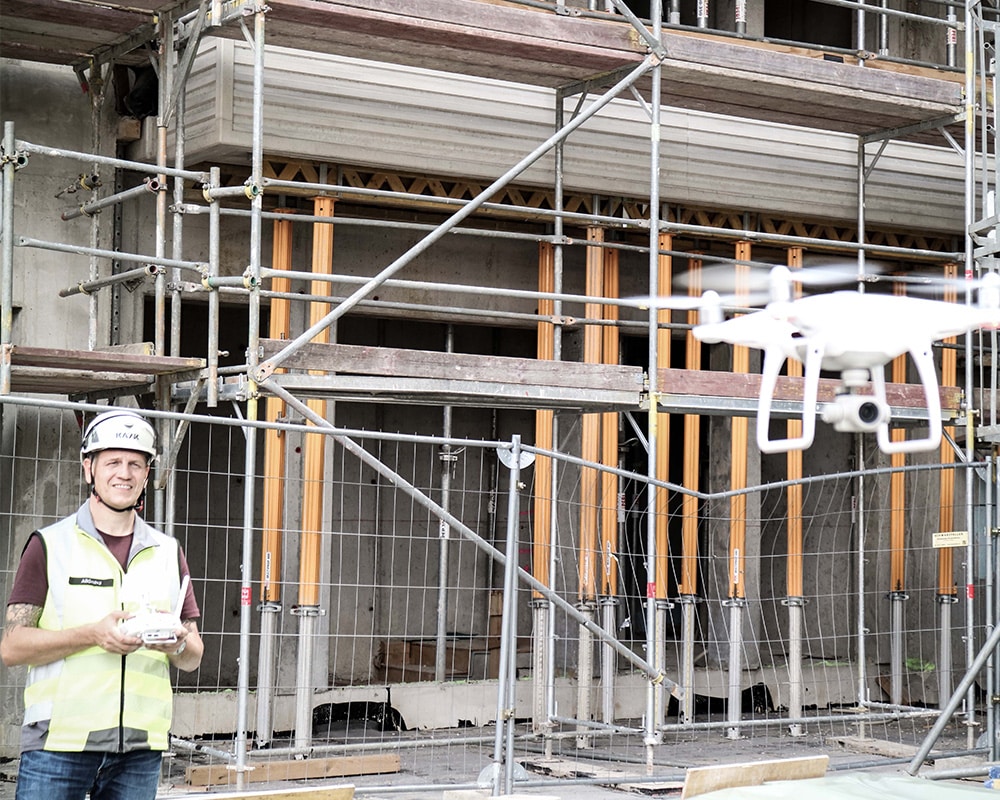
- Building or bridge inspections
- Surveying and mapping tasks
- Agricultural flights, e.g. for pest analysis or sowing
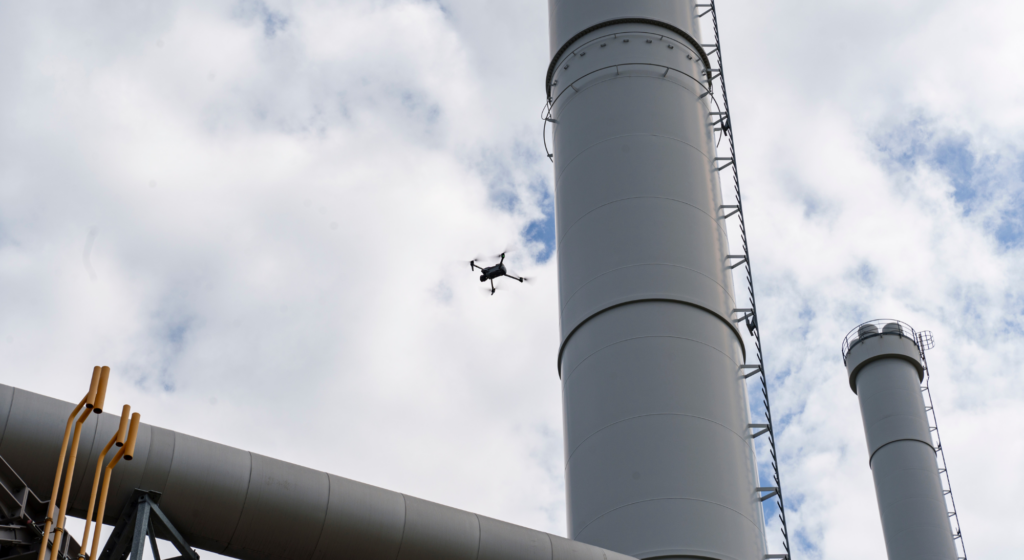
For companies, the commercial use of drones has long been more than just a trend: the use of drones saves time, increases safety, and provides accurate data —for example, during inspections, surveys, or security tasks. It is crucial to classify the planned operation correctly: while many uses fall under the open category, more complex missions require a permit in the specific category. Anyone who wants to use a drone commercially should therefore take both technology and regulations into account.
1. legal basis: EU drone regulation
The EU Drone Regulation (Regulation (EU) 2019/947) has been in force throughout Europe since January 1, 2021. It distinguishes between three operating categories: open, special and certified.
The open or special category is relevant for most commercial applications:
- Open (A1-A3): Standard flights with lower risk, often with online training and proof of competence (e.g. A1/A3 or A2 certificate).
- Special (STS or SORA procedure): For complex flights, e.g. beyond visual line of sight (BVLOS), over populated areas or with large drones.
2 What do you need for a commercial drone flight?
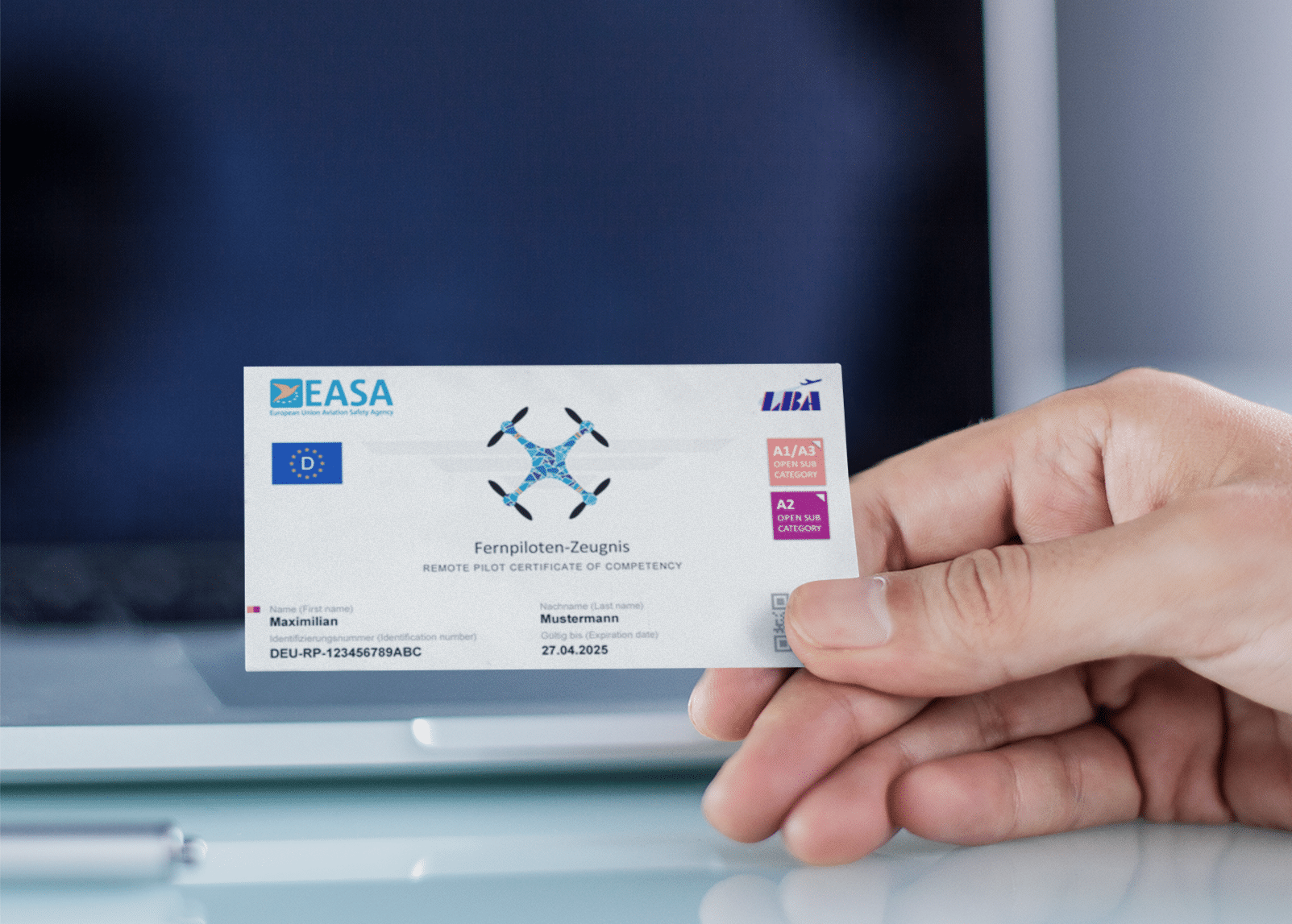
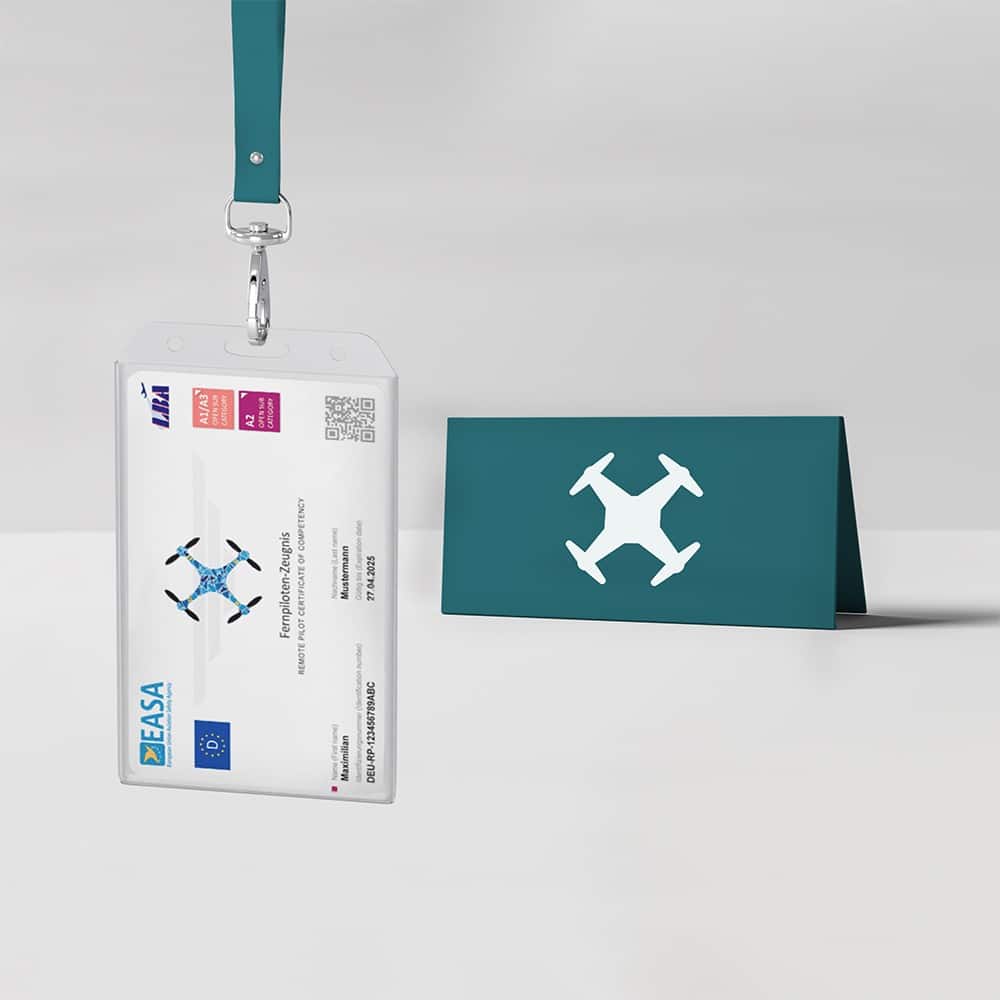
Drone driver's license / remote pilot certificate
- A1/A3 certificate of competence: For simple flights with low risk
- A2 remote pilot certificate: For flights in populated areas with a closer safety distance to people
- STS certificate or individual SORA approval procedure: for special applications and BVLOS applications
Registration as a drone operator
- Mandatory for all commercial users at the responsible aviation authority (in Germany, e.g. at the Federal Aviation Office LBA).
- You will receive an operator ID, which must be visibly attached to the drone.
Insurance
- Commercial drone liability insurance is required by law.
- Optional: fully comprehensive insurance for high-quality systems.
In practice, drone pilots should clarify at an early stage which drone license is required for the respective mission. Depending on the operation (e.g., proximity to people, flying in built-up areas, or special risk scenarios), the A1/A3 certificate of competence may be sufficient—or the A2 certificate or a special category authorization may be required. For companies, it is worthwhile to have a uniform training concept so that all pilots work according to the same standards and missions remain reliably plannable.
3. where are you allowed to fly commercially?
Every flight location must undergo a risk assessment in advance. Only when you know what dangers exist at this location can you decide whether the flight is possible under the standard rules or whether you need a special permit.
The following questions will help you find your way around:
- Are there bystanders in the flight area? → You may not fly over them without permission.
- Am I keeping enough distance from residential areas, industrial facilities, or traffic routes? → Strict minimum distances apply, especially in populated areas.
- Is the location near an airport or critical infrastructure? → There are restricted zones in which a flight is not permitted without authorization.
- Do I stay below the legally permitted flight altitude of 120 meters? → Higher flights are only possible with a special permit.
- Is it a BVLOS flight (beyond visual line of sight)? → These missions require a permit in the special category.
If you go through these points systematically, you will quickly recognize whether your flight can be operated in accordance with the law within the framework of the open category, or whether an extended procedure or a special permit is required.
Structured planning is crucial, especially for recurring missions: The use of drones should always be based on a comprehensible risk assessment that is appropriate for the planned operation. This is particularly true when drones are used in sensitive areas, such as industrial facilities, critical infrastructure, or urban areas. Clearly documenting these factors saves time later on when approvals are required and reduces the risk of missions being aborted.
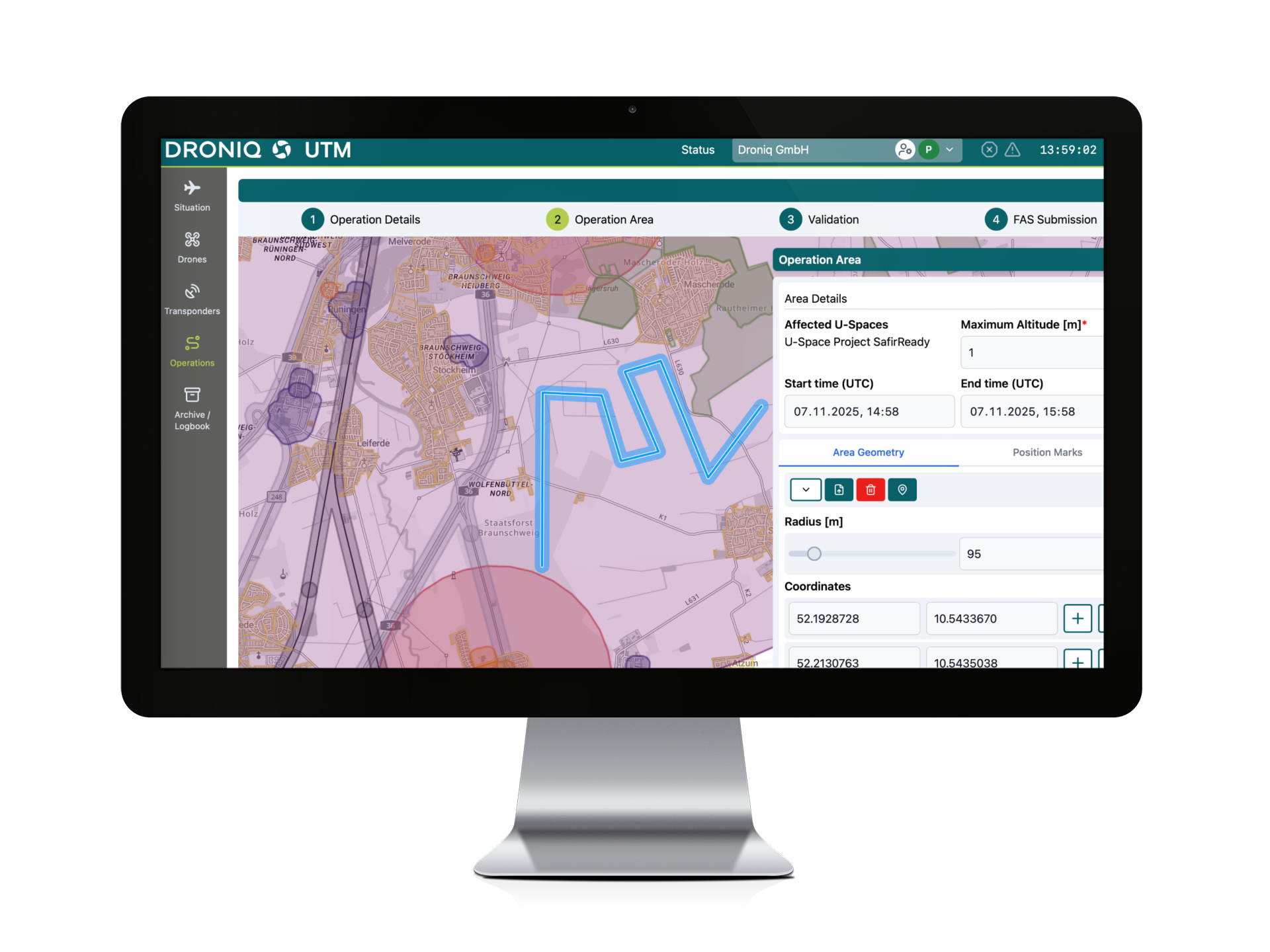
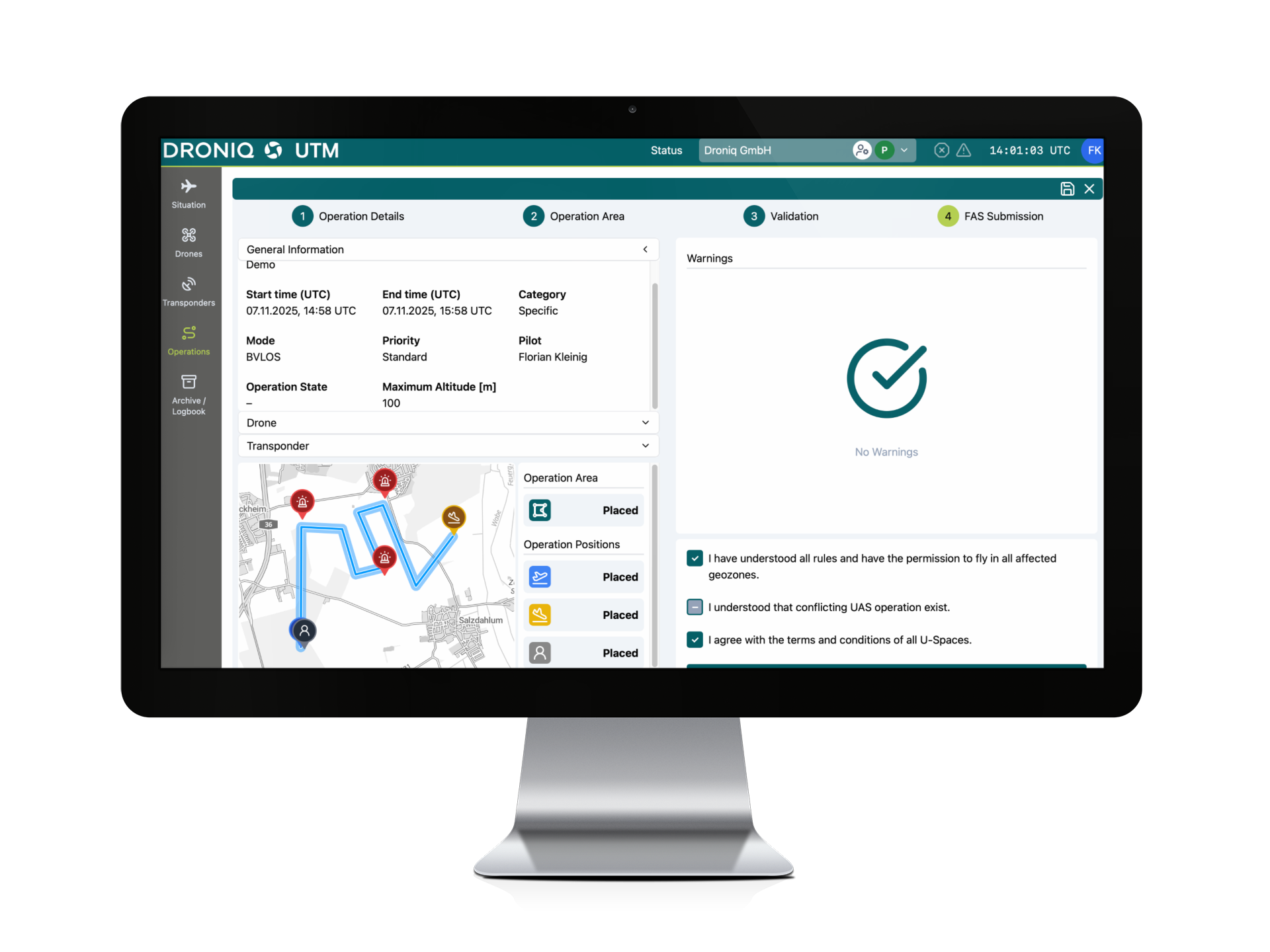
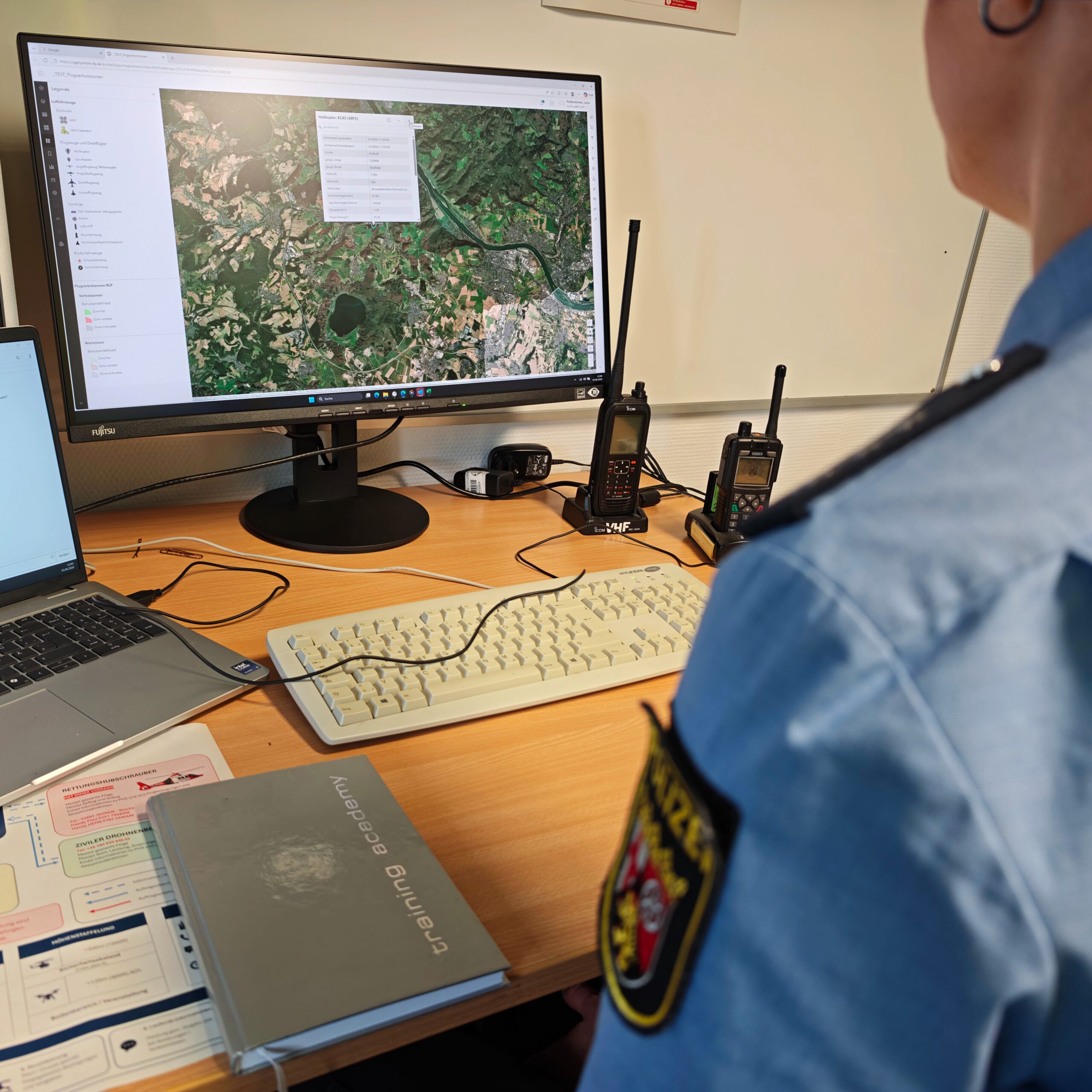
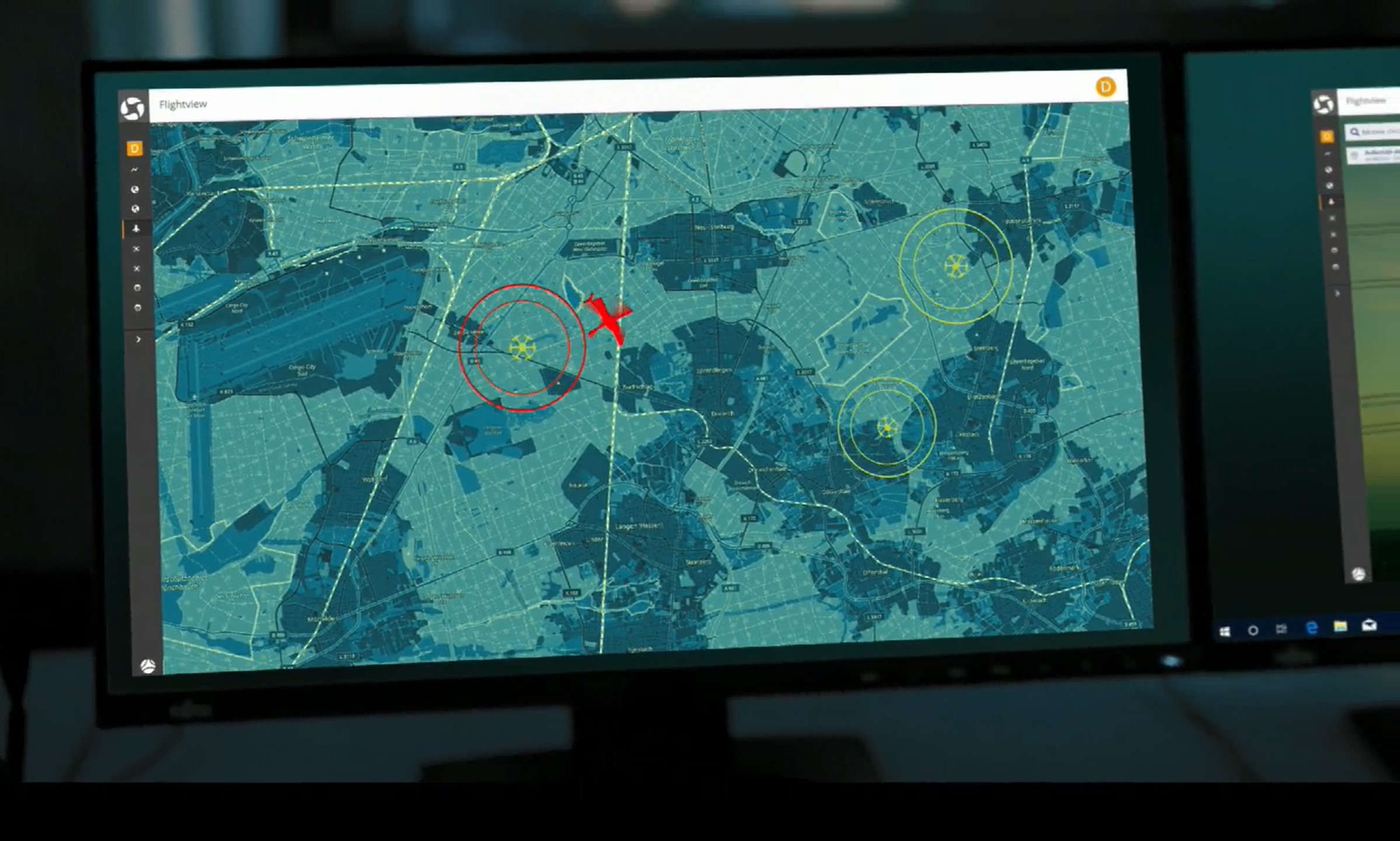
Tip: With Droniq Maps you can check your missions in advance. The tool automatically compares your planned route with the current geo- and no-fly zones according to LuftVO. This allows you to avoid prohibited or restricted areas and know exactly which regulations apply at your flight location.

4 Typical applications for commercial drone flights
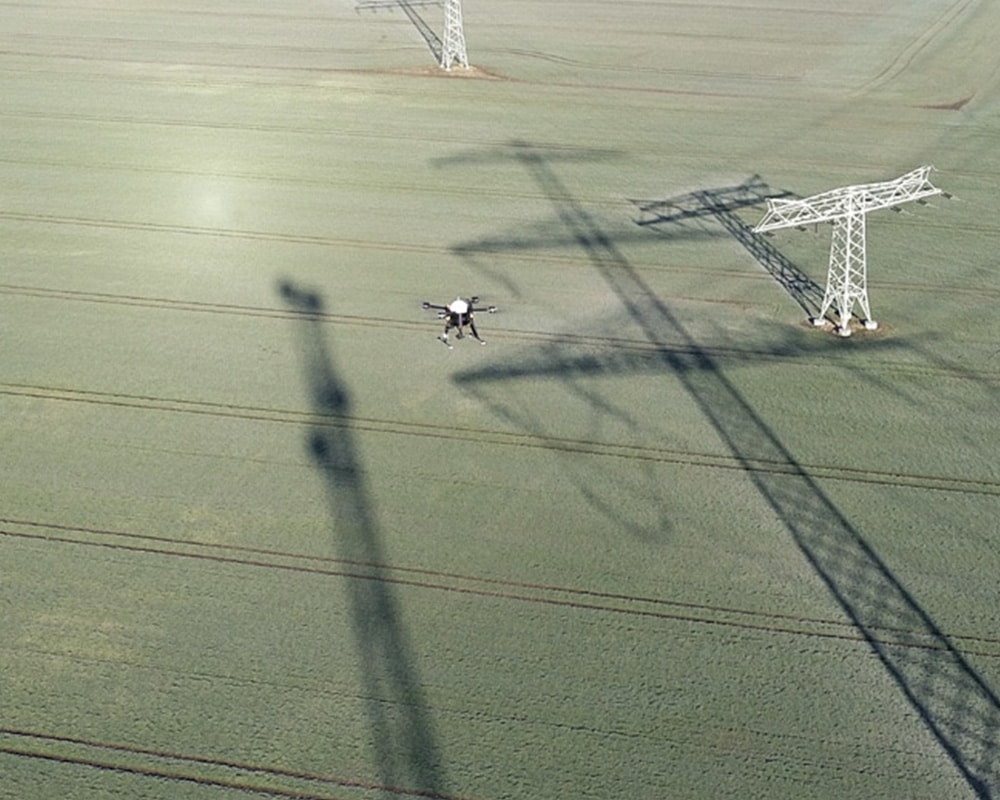
- Inspections: Wind turbines, structures, routes
- Energy supply: Thermal imaging inspection of PV systems
- Agriculture: Precision agriculture, wildlife search
- Surveying: Terrain surveys, 3D models with LiDAR or photogrammetry
5 Which drone is suitable for commercial use?
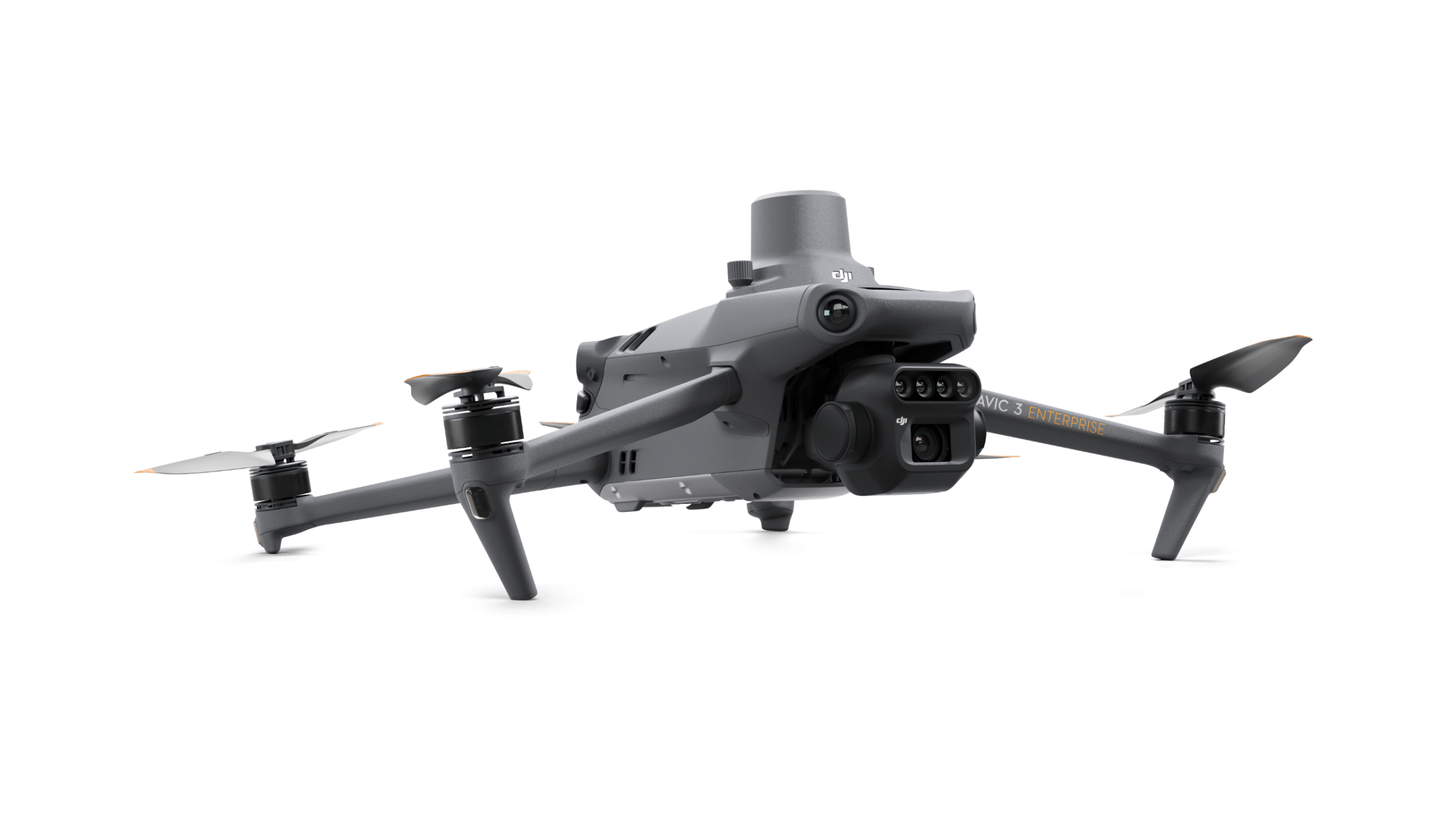
At Droniq you will find a selection of professionaldrone solutions, including:
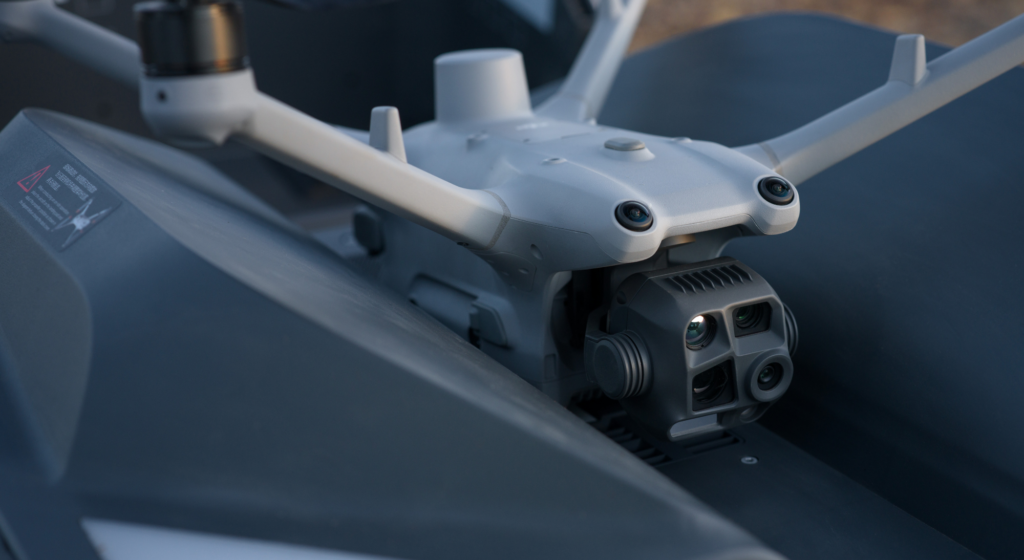
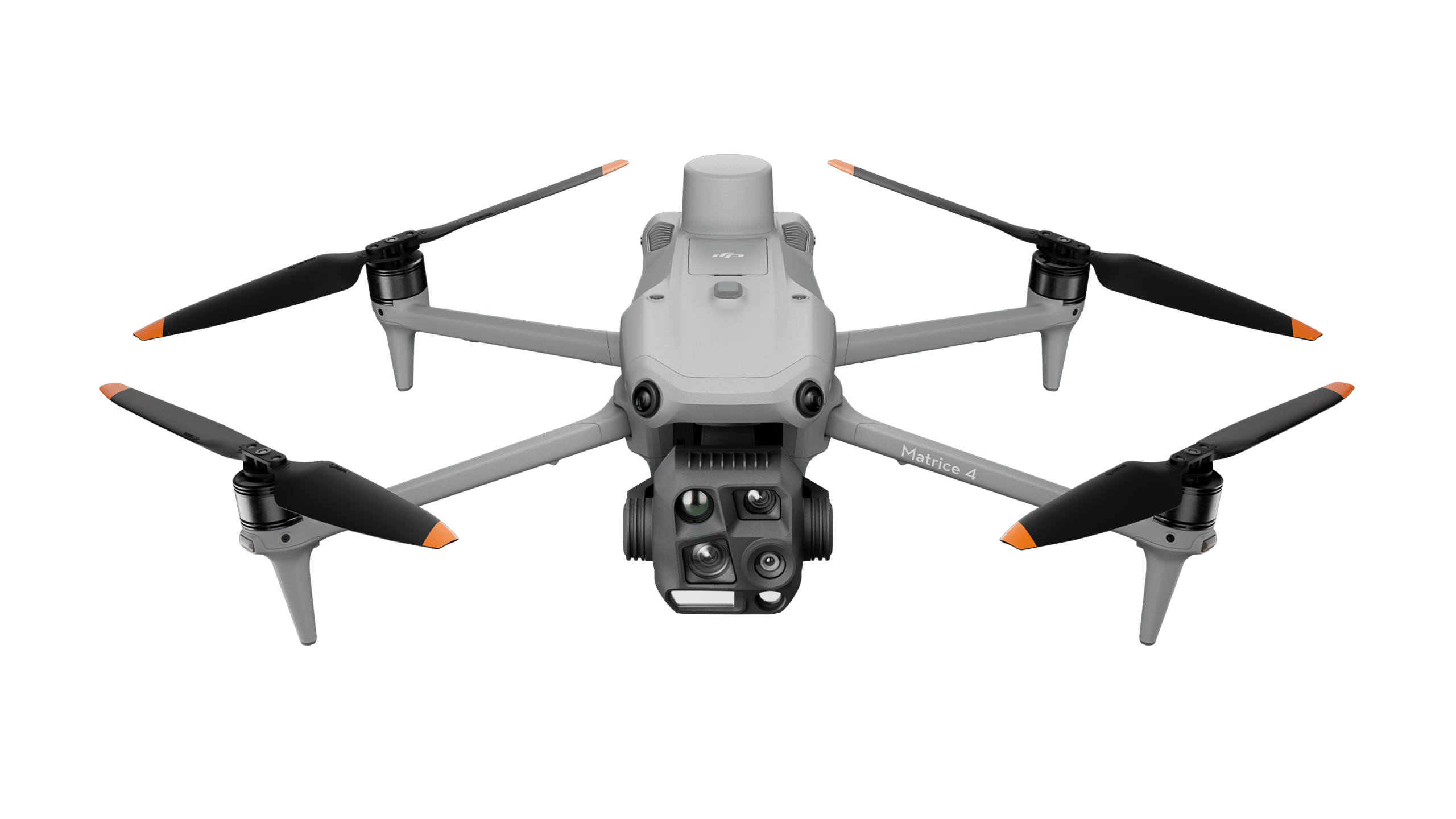
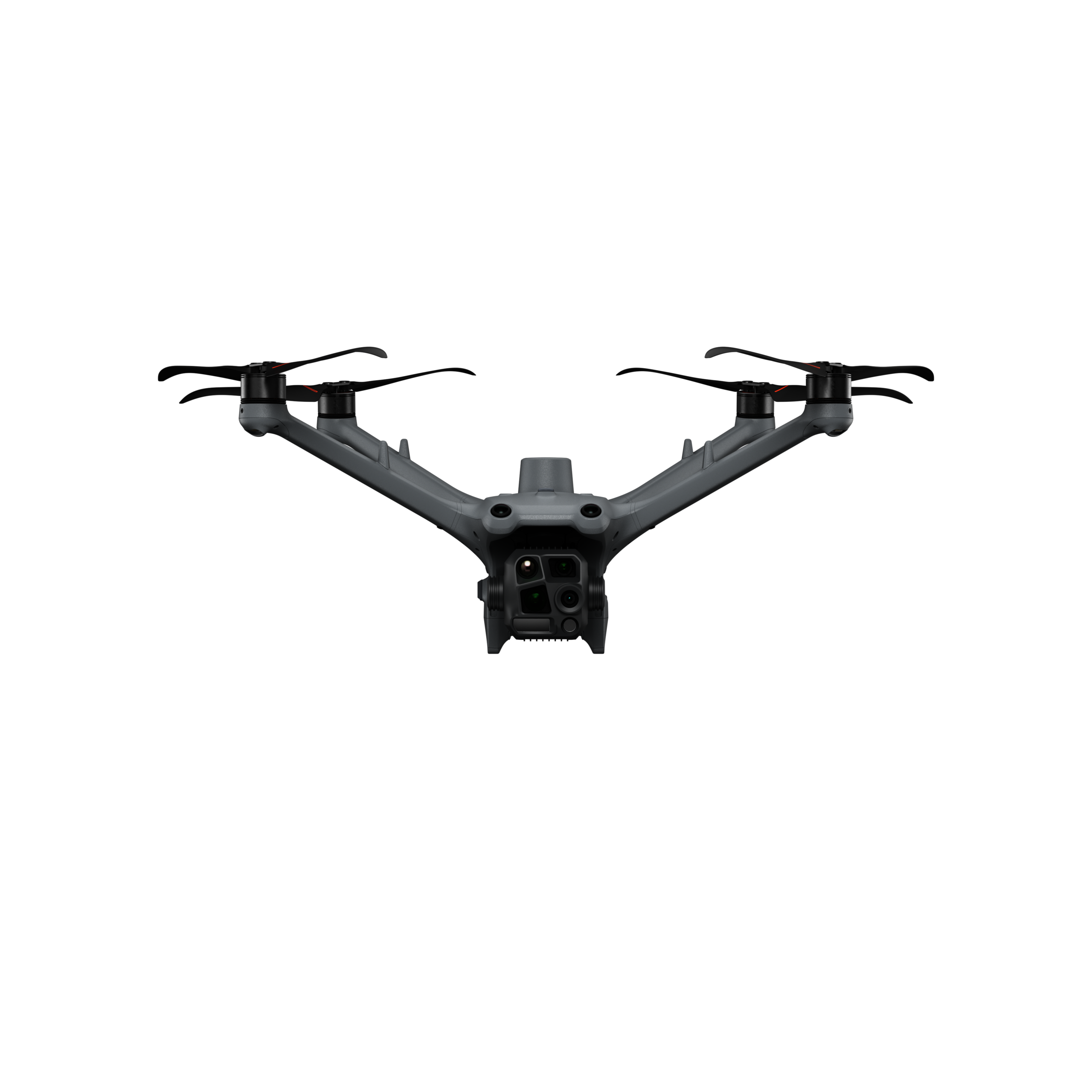
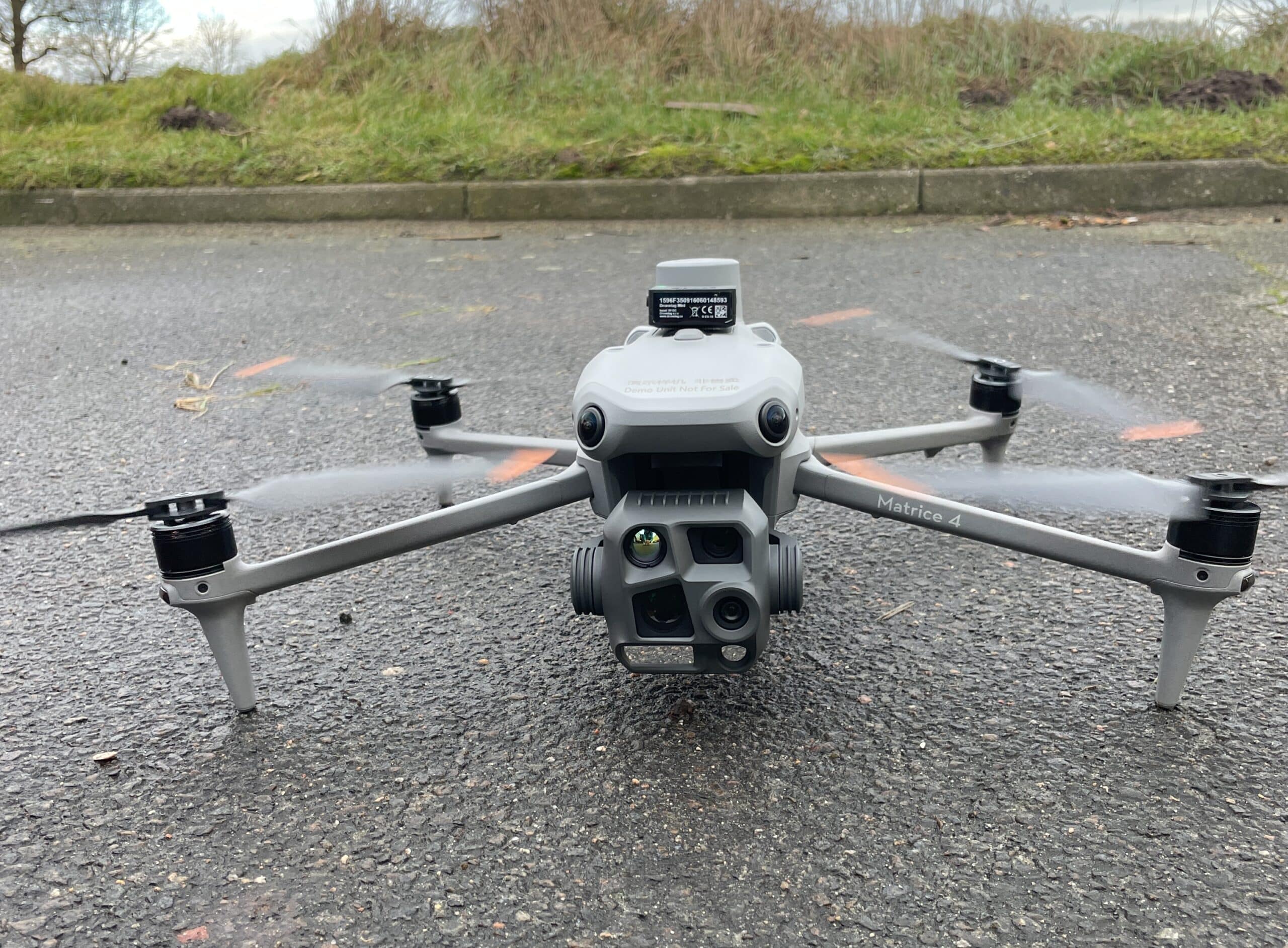
- DJI Matrice 4T: Compact, with thermal imaging camera
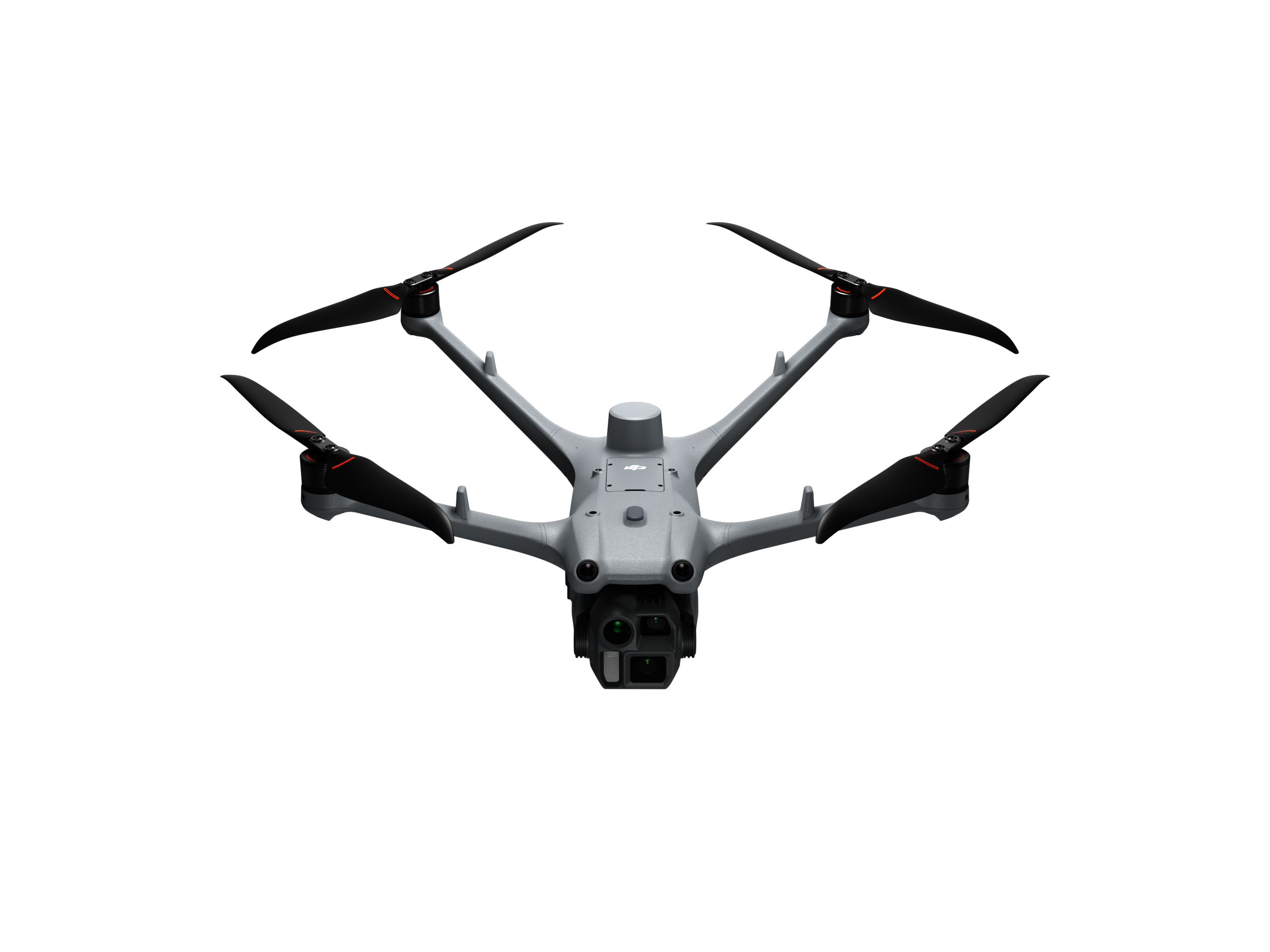
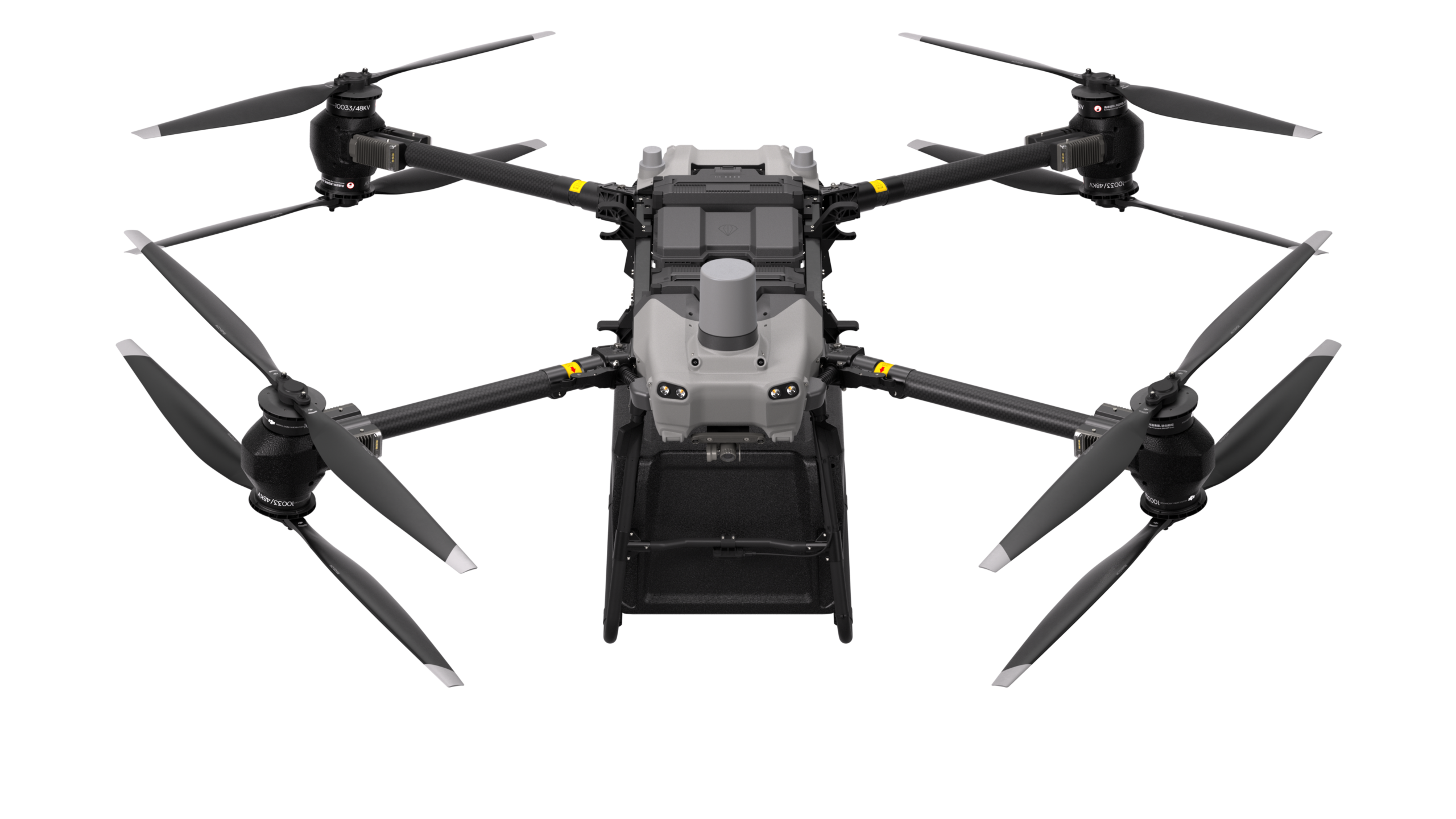
- DJI Matrice 400: Modular, for inspection, surveying & safety
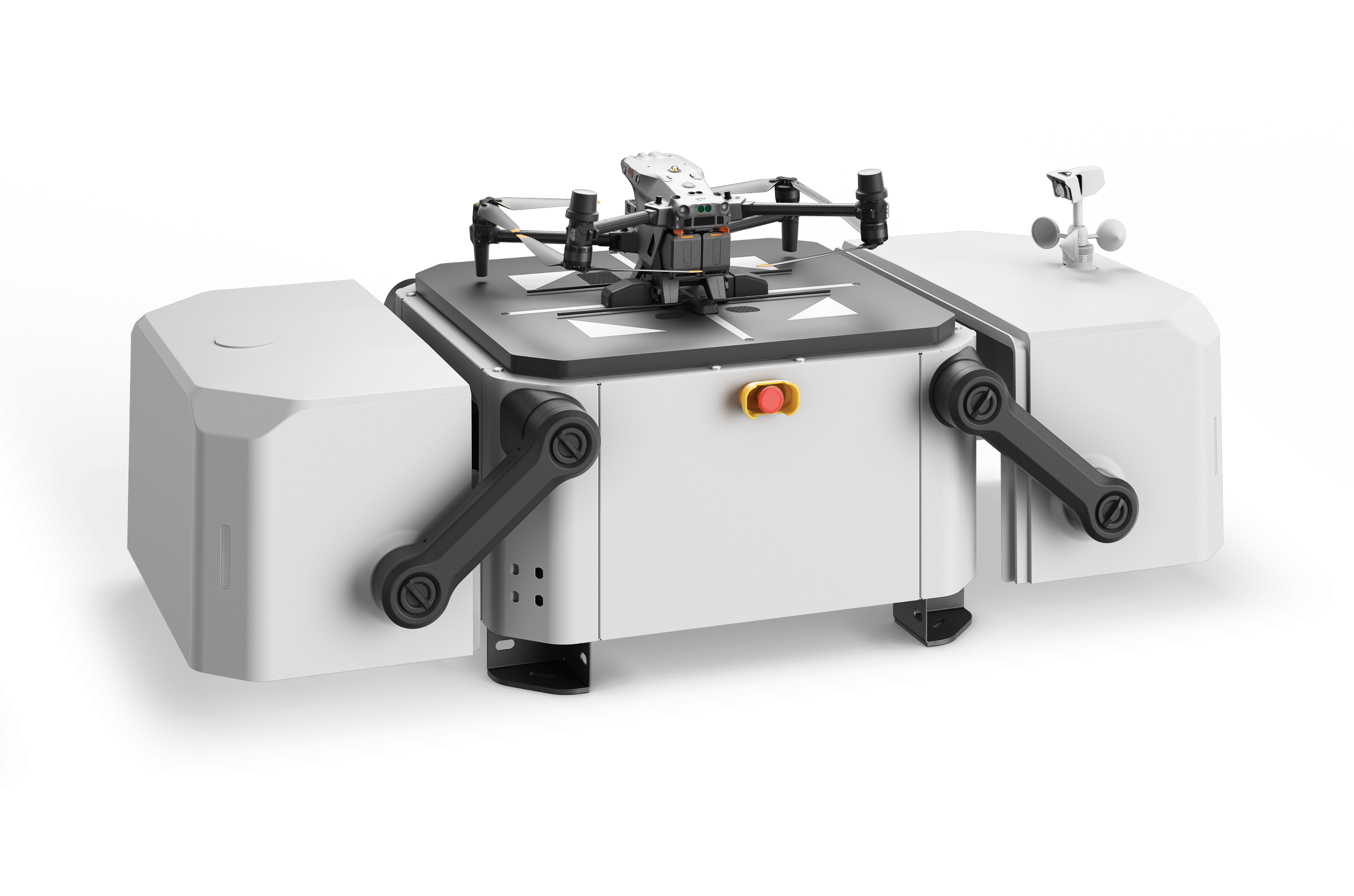
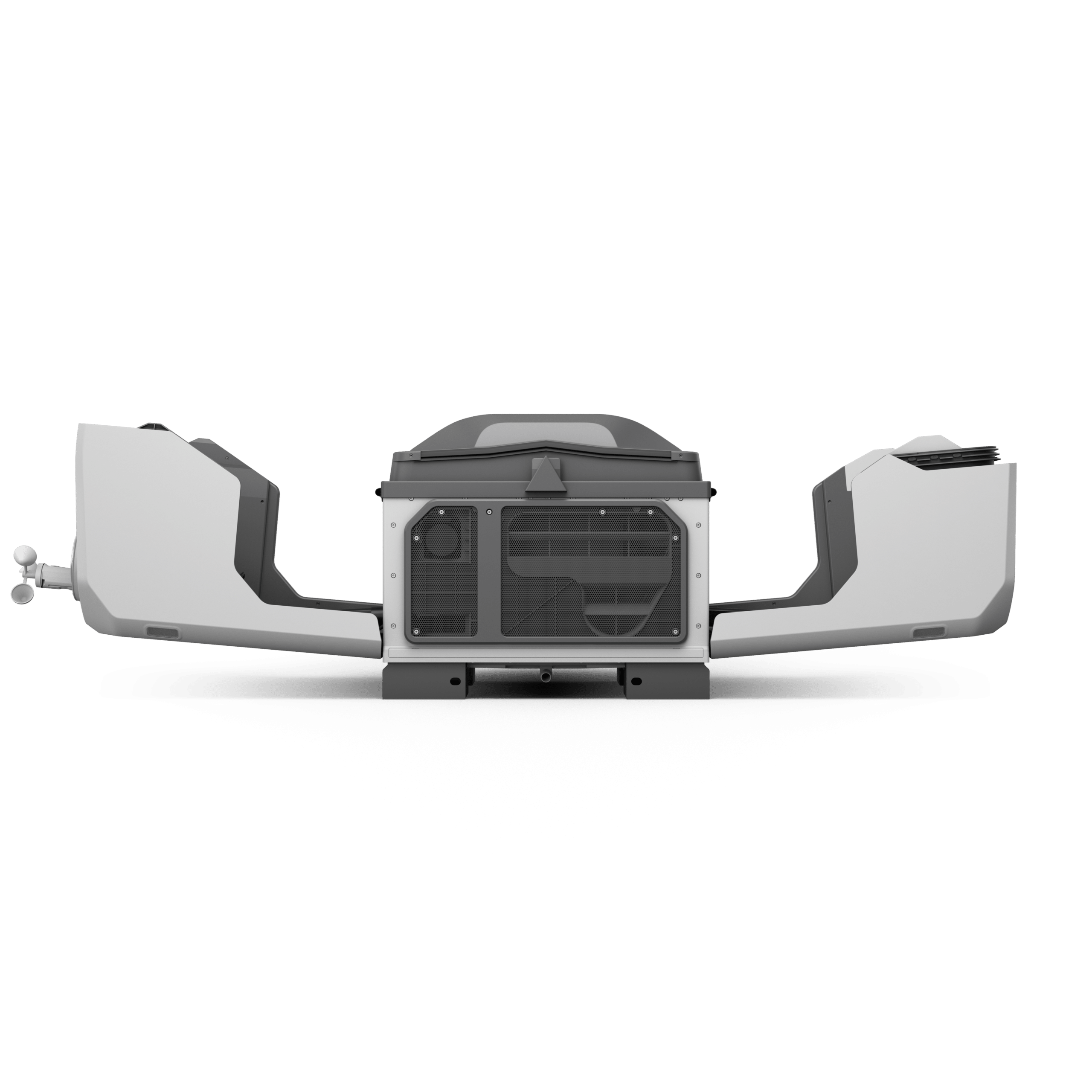
- DJI Dock + M4D: Autonomous system for recurring missions
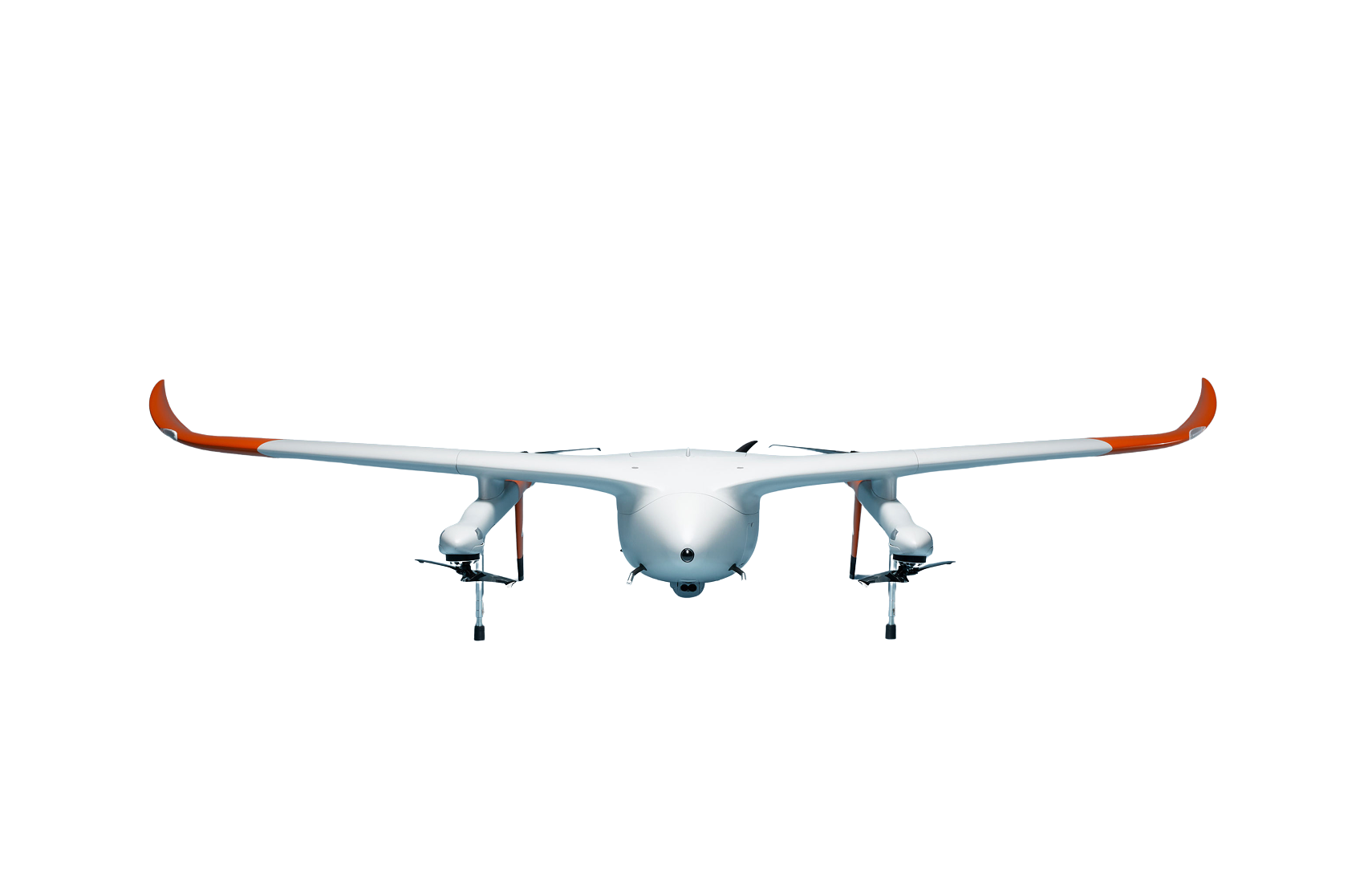
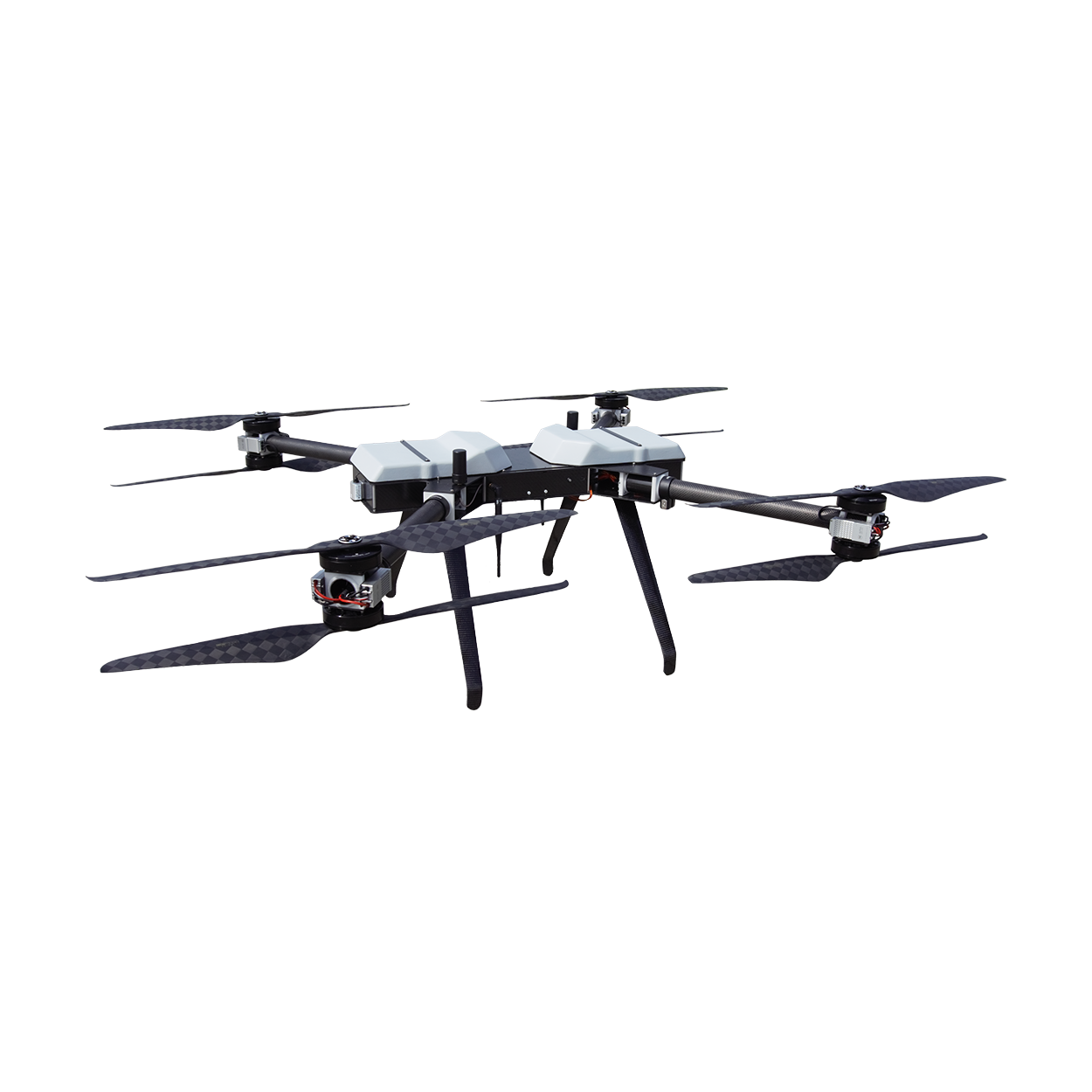
Whether for demanding BOS missions, mapping, surveying, industrial plant inspections or fawn rescues in agriculture - DJI drones set the standard in drone technology. We offer a wide range of drones that are known for their outstanding quality and advanced technology. Here is an overview!
For the use of drones in a company to work in the long term, clear responsibilities are needed: Who is the operator, who are the responsible drone pilots, and how are maintenance, flight approvals, and documentation regulated? A centralized process for planning and compliance is particularly recommended when multiple teams or locations use drones. This turns individual flights into scalable, safe operations—with uniform standards for technology, personnel, and missions.
Conclusion: Commercial drone flights require expertise - and the right equipment
If you want to fly a drone commercially, you need to be well prepared:
- Drone license / remote pilot certificate
- Suitable drone insurance
- Knowledge of the EU drone regulation
- Possibly special permits for BVLOS or complex applications
Droniq supports you in making your drone operations legally compliant, efficient and successful.