Intended use
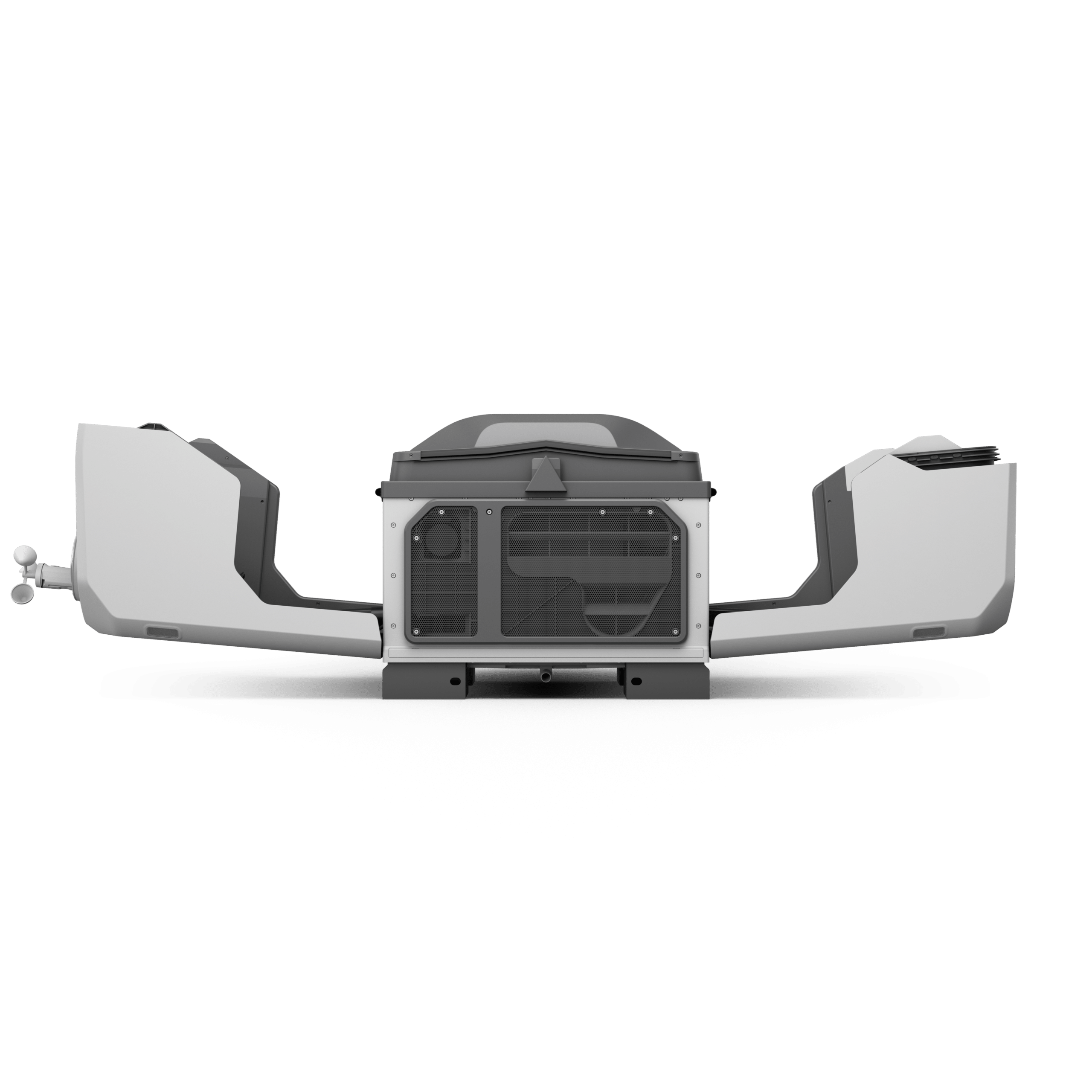
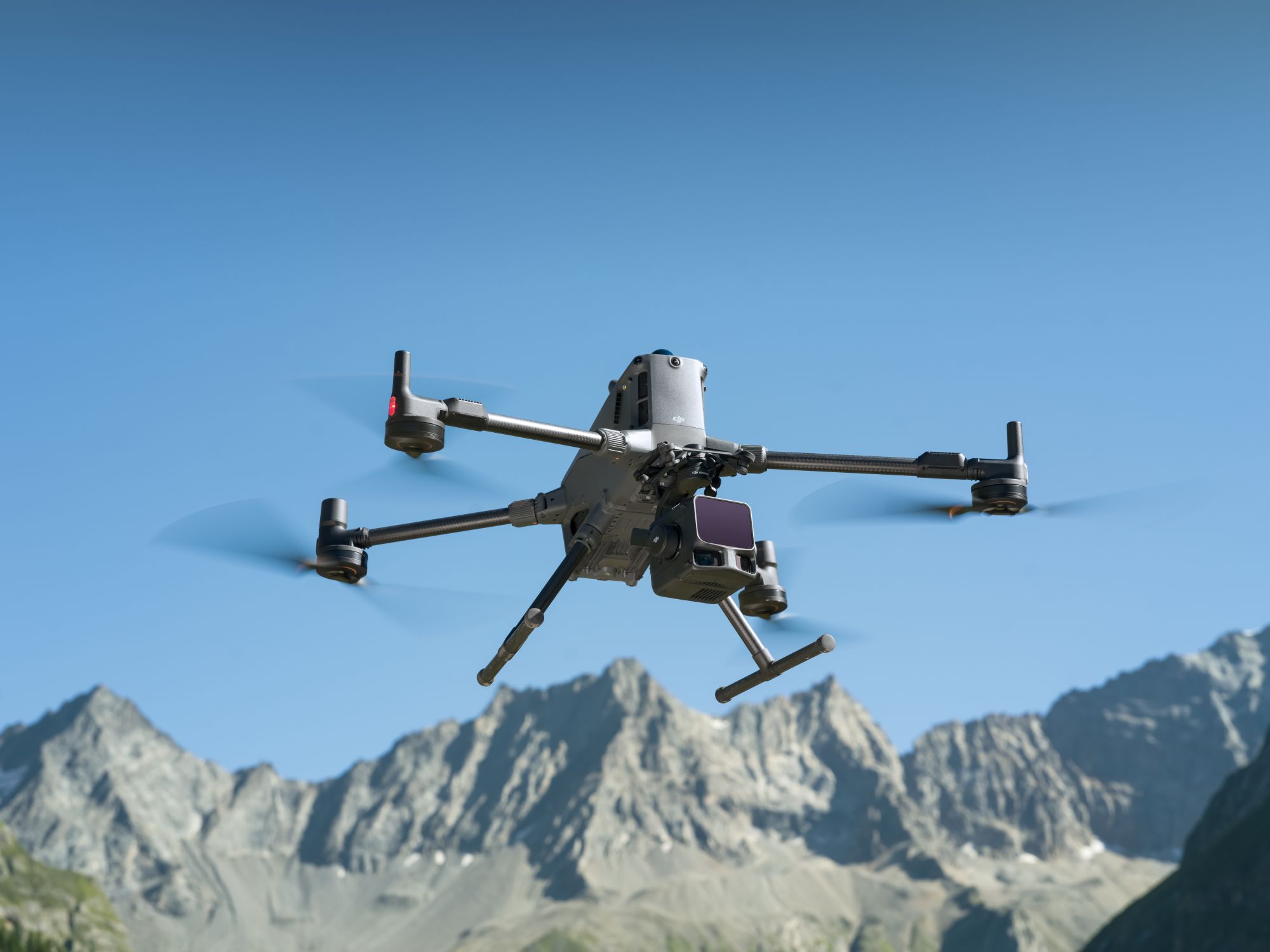
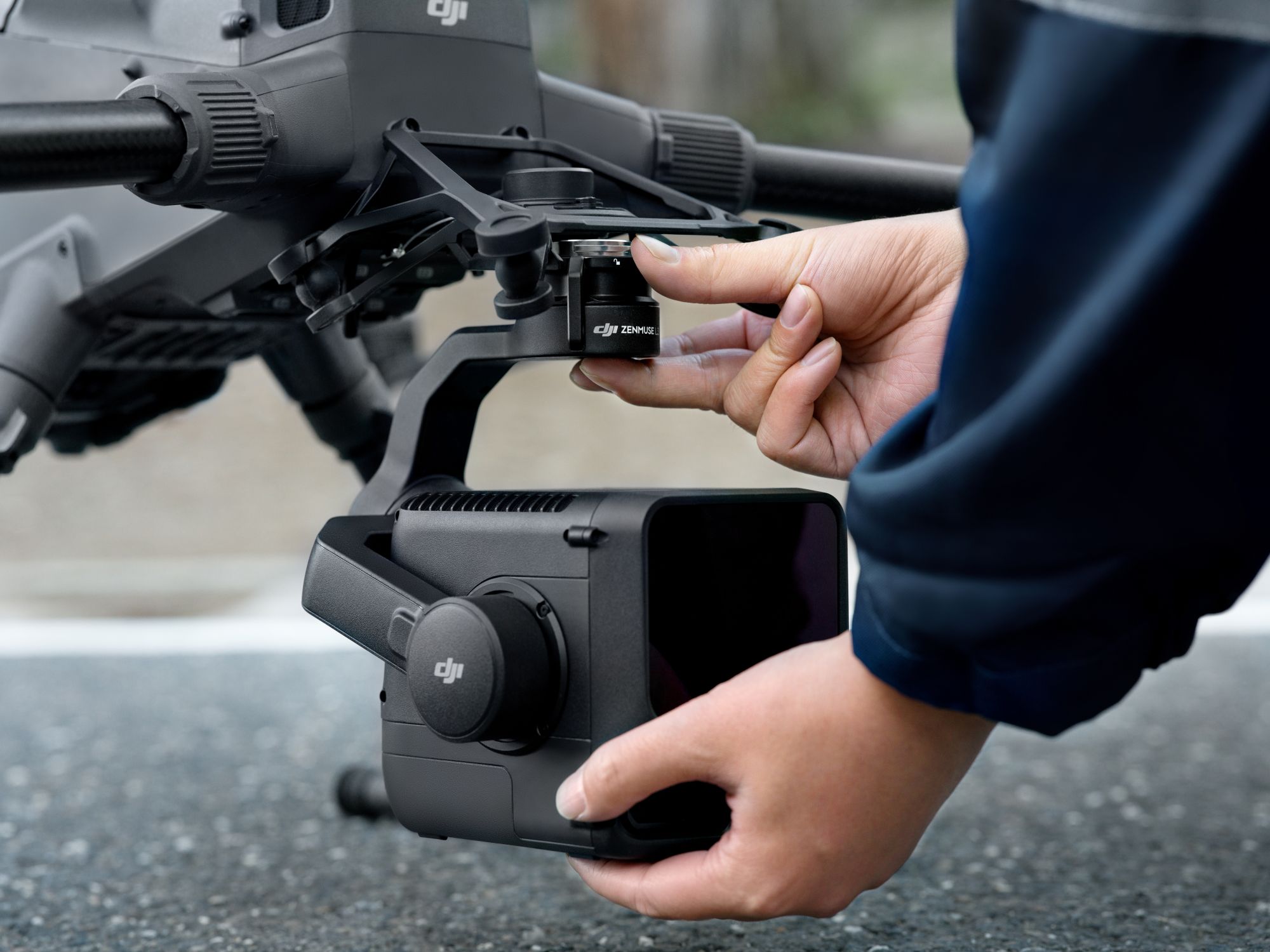
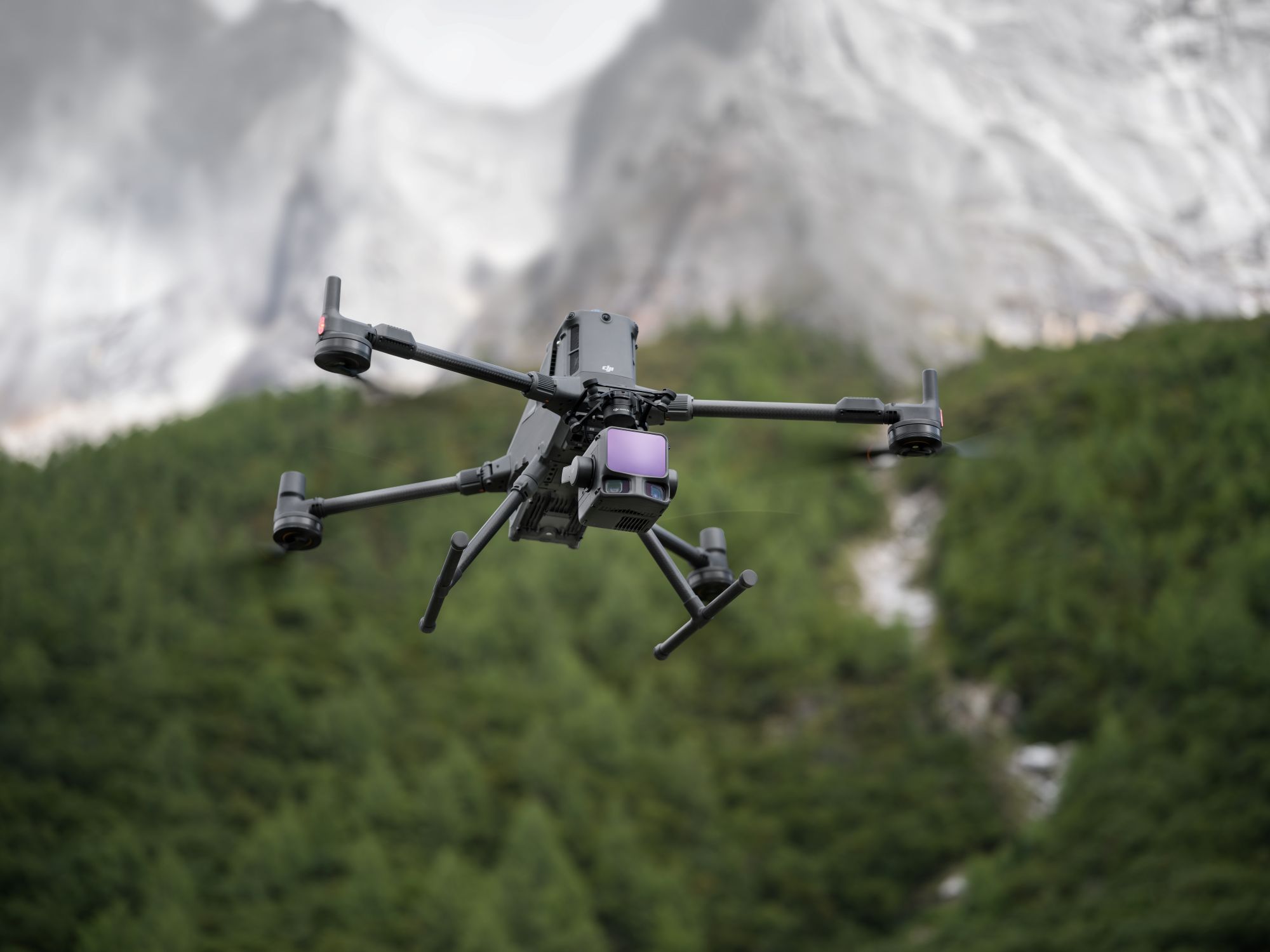
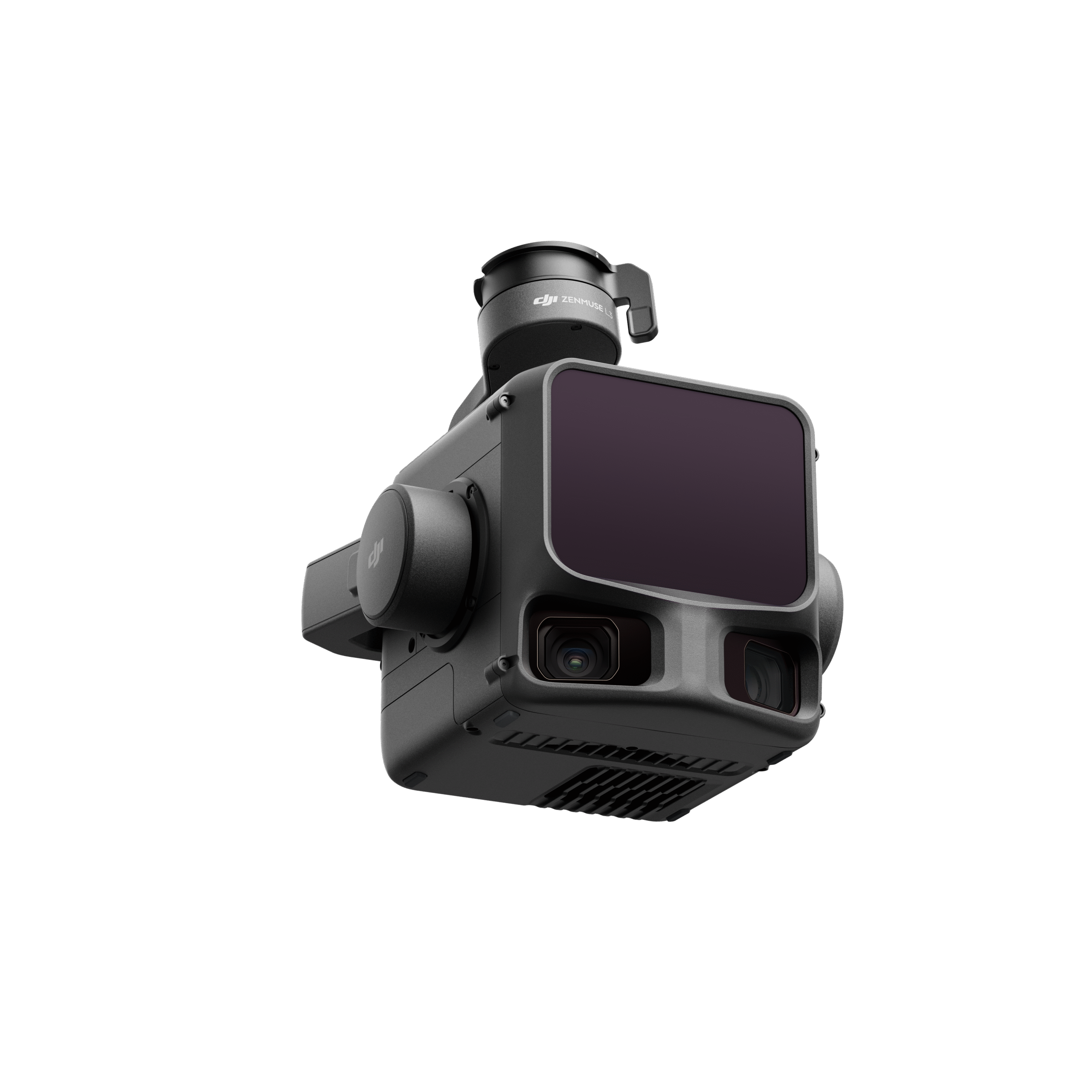
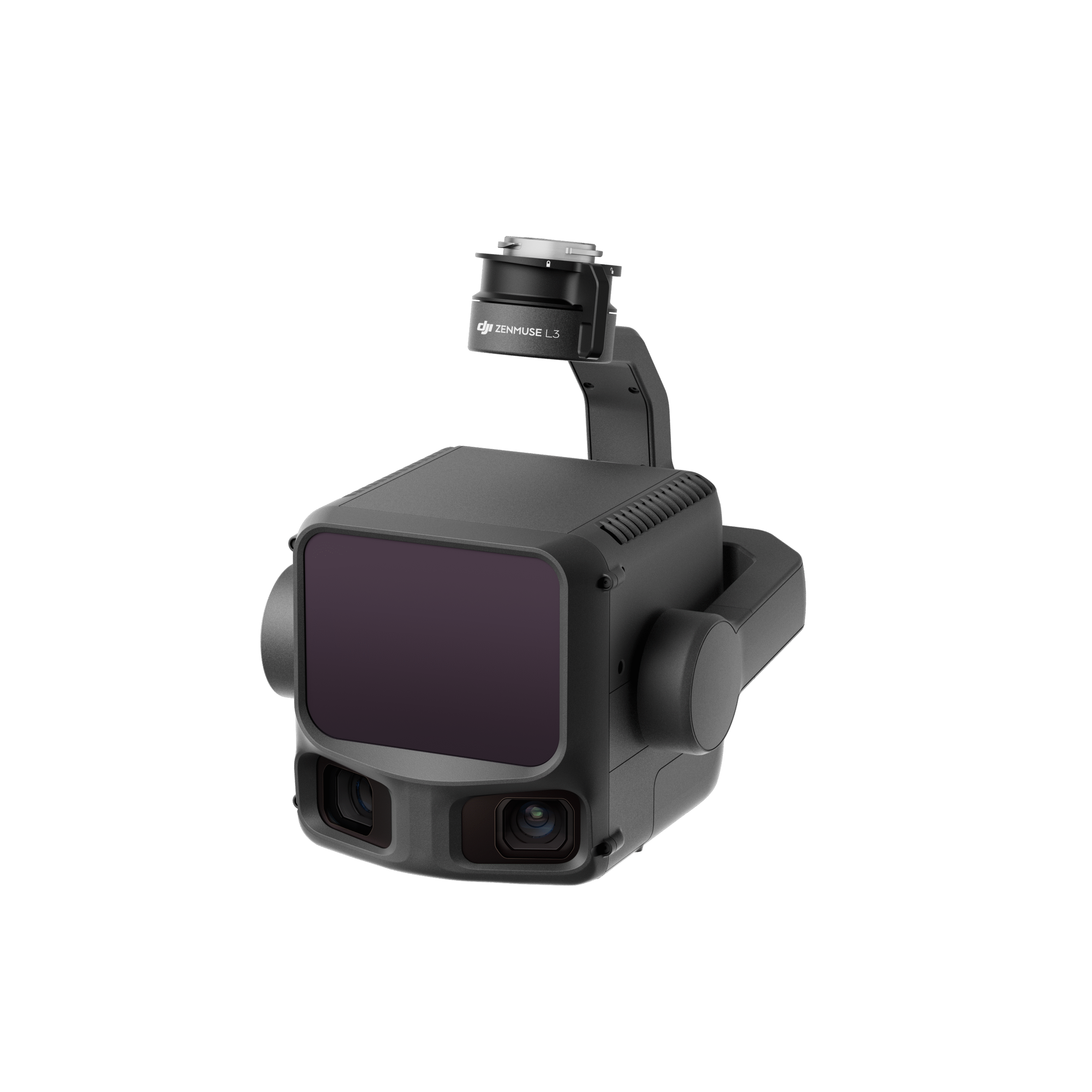
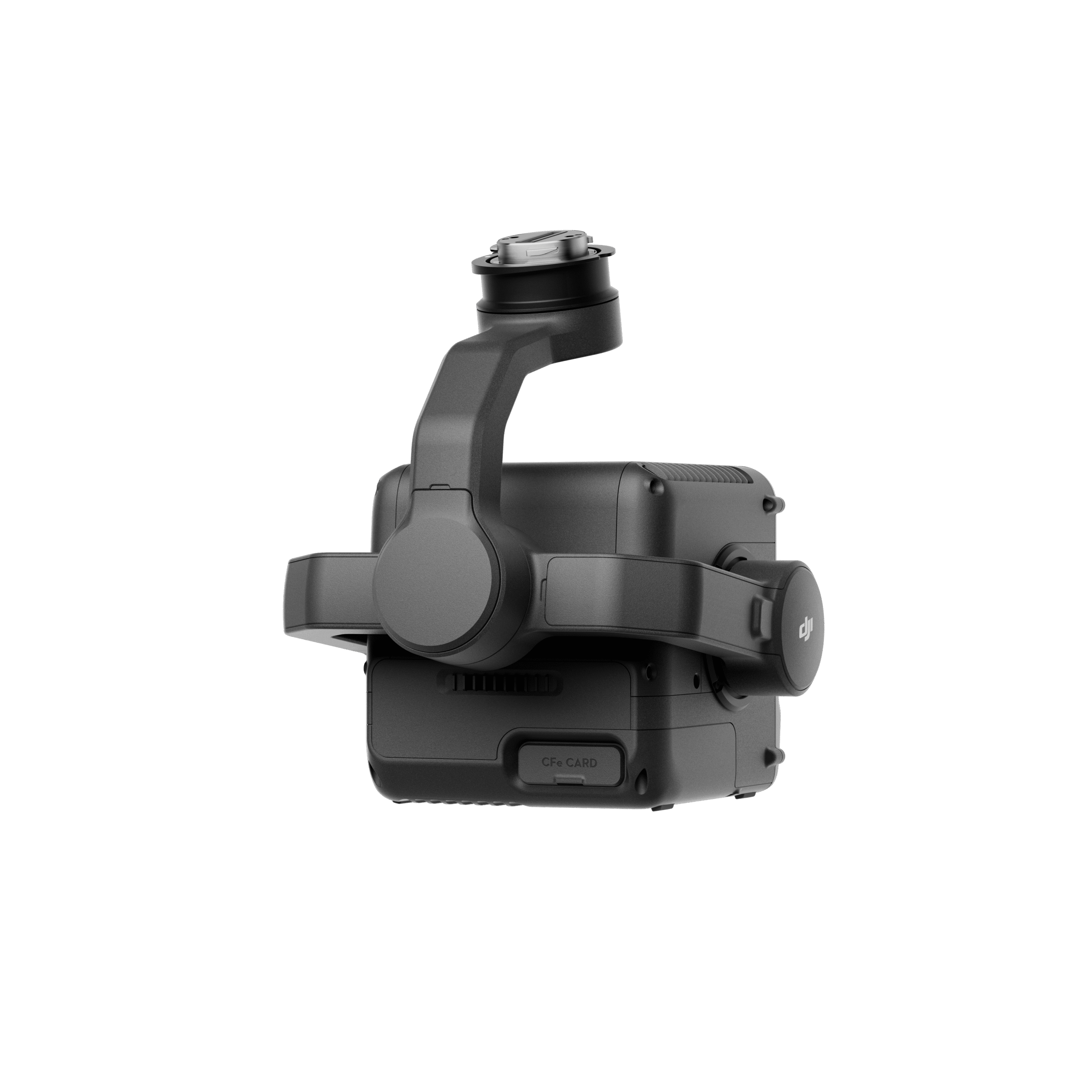
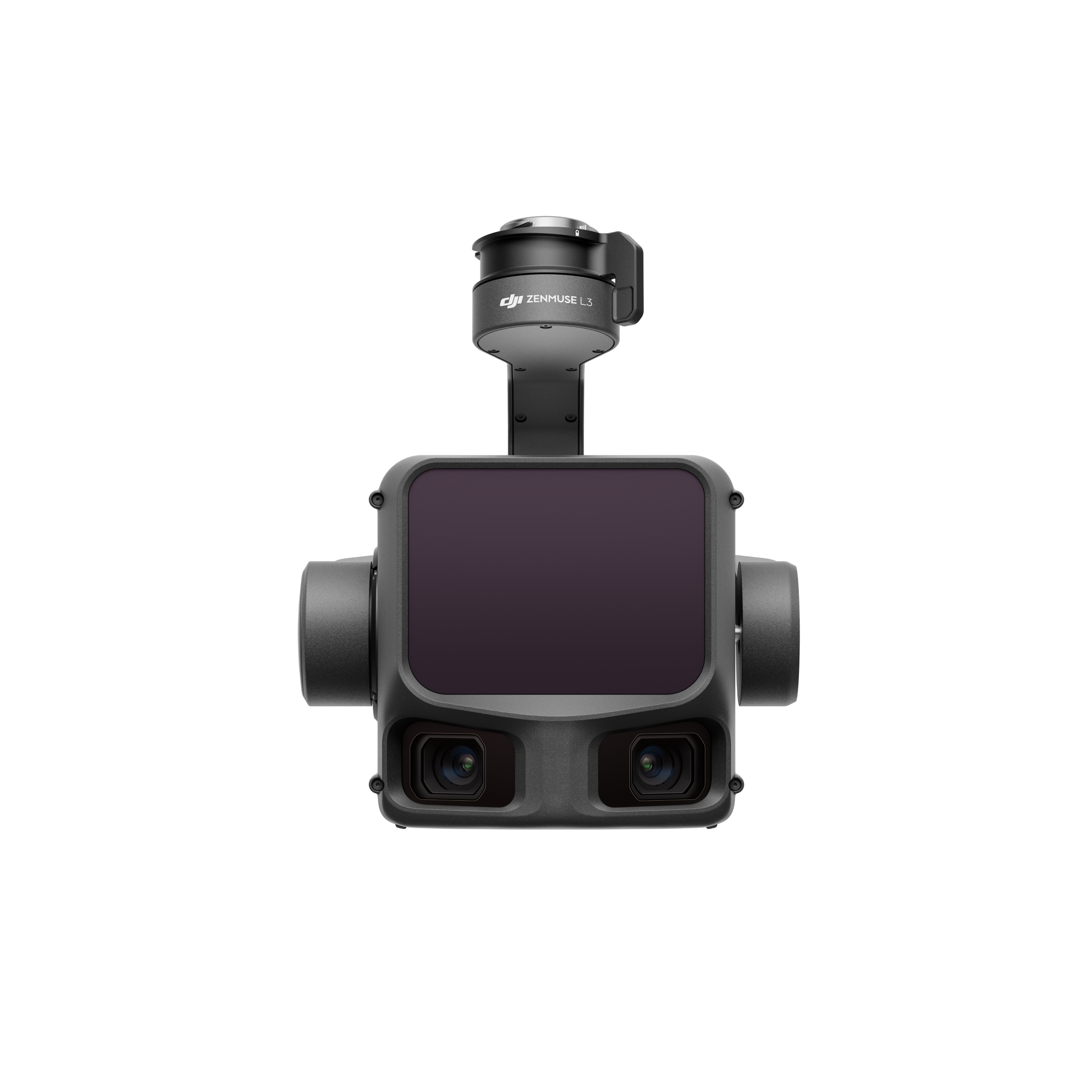
With the DJI Zenmuse L3, DJI presents the first high-precision aerial and long-range LiDAR system of its kind. The DJI Zenmuse L3 impresses in a variety of professional applications where precision, range and efficiency are crucial.
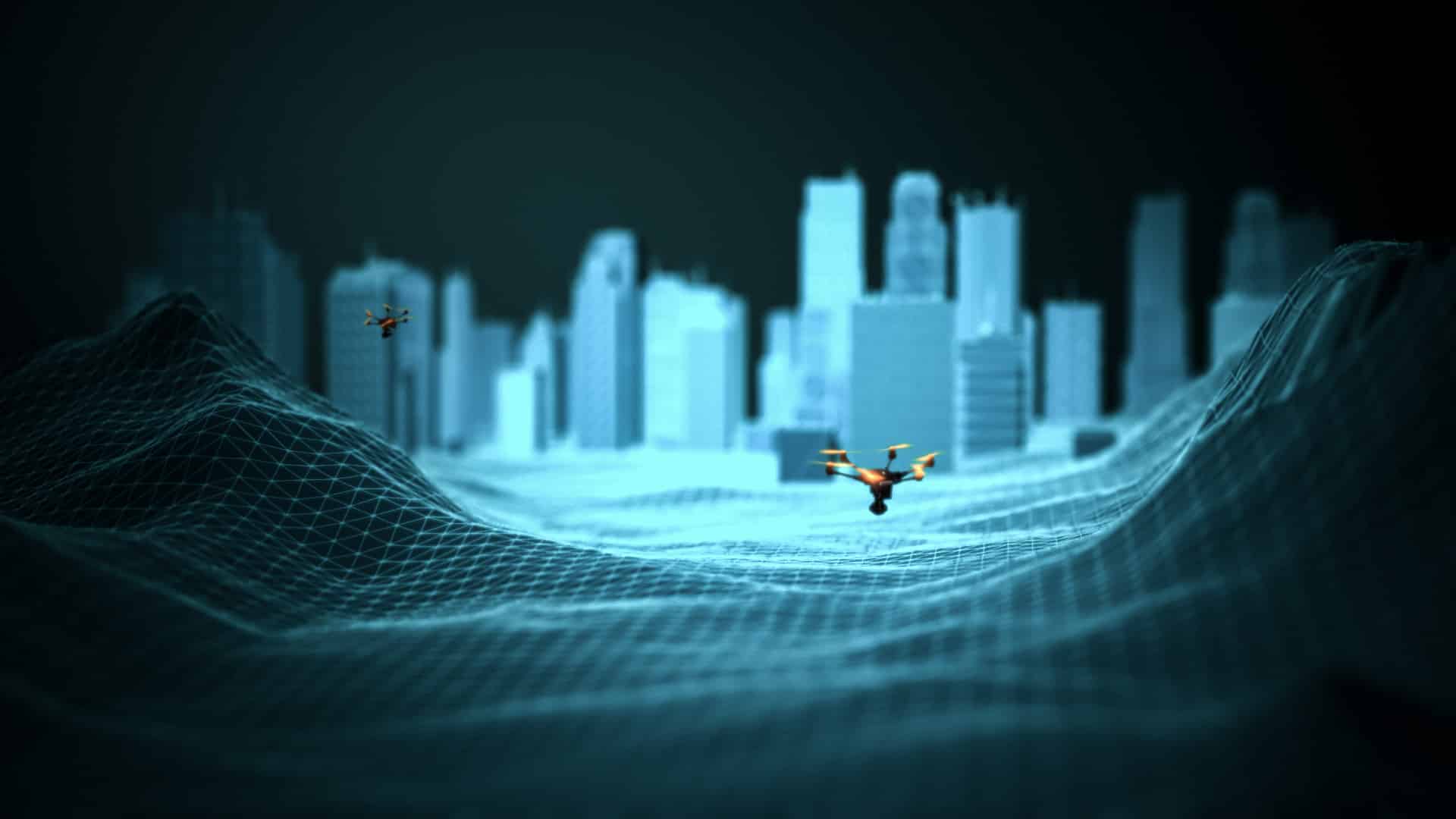
- Large-scale mapping and digital twins
Ideal for creating precise maps and 3D models - with a daily coverage of up to 100 km². - Railroad line and embankment scanning
Enables the detailed recording and analysis of linear infrastructure such as railways, roads and embankments. - Forestry analyses
Recognizes vegetation structures, tree heights and soil profiles even under dense forest cover. - Archaeological and geological investigations
Visualizes fine terrain forms and hidden structures for research and documentation. - Emergency mapping and deployment planning
Provides up-to-date 3D data in the shortest possible time for rapid situation assessment and coordination of emergency services.
Scope of delivery
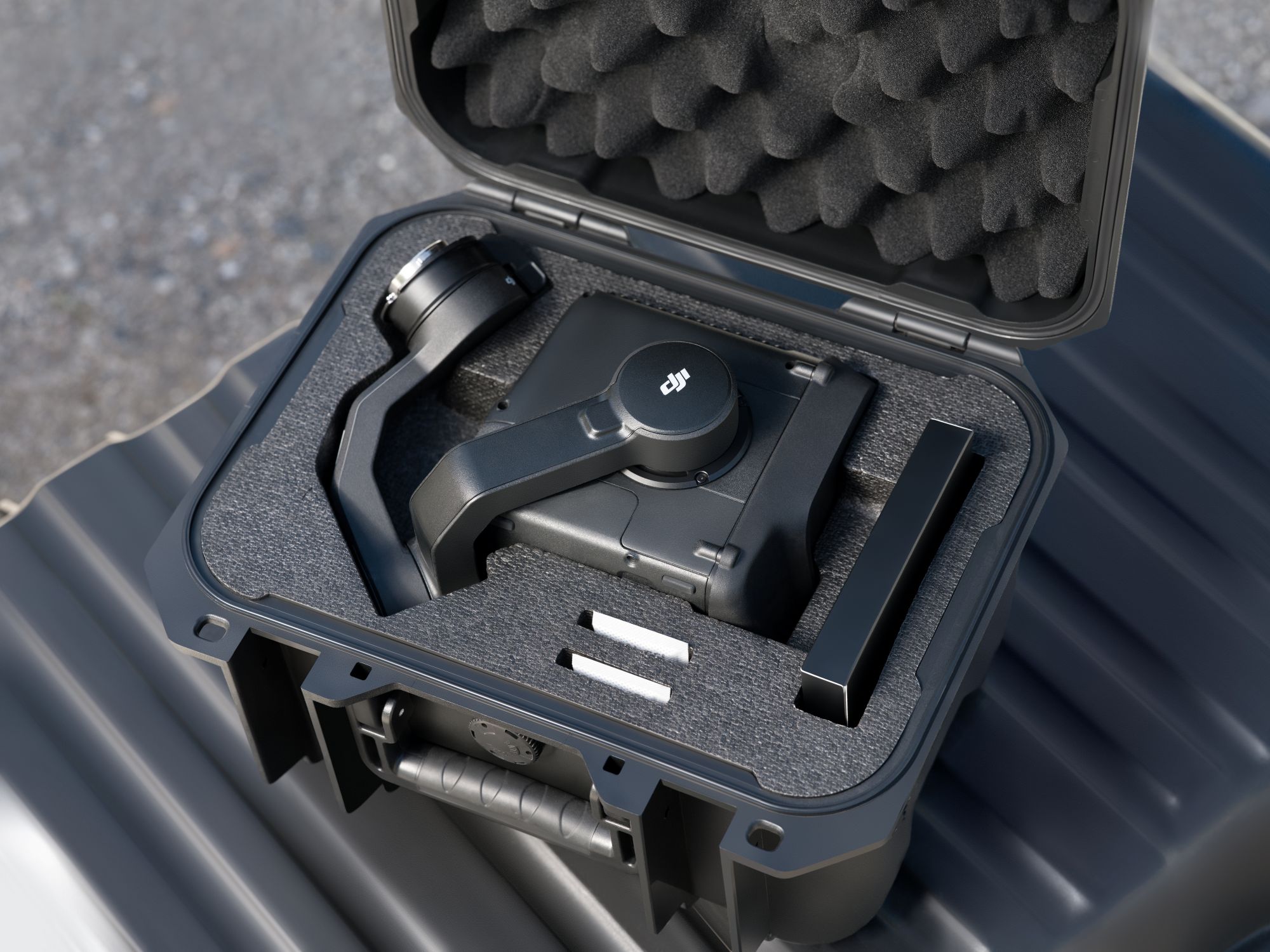
- 1x Zenmuse L3
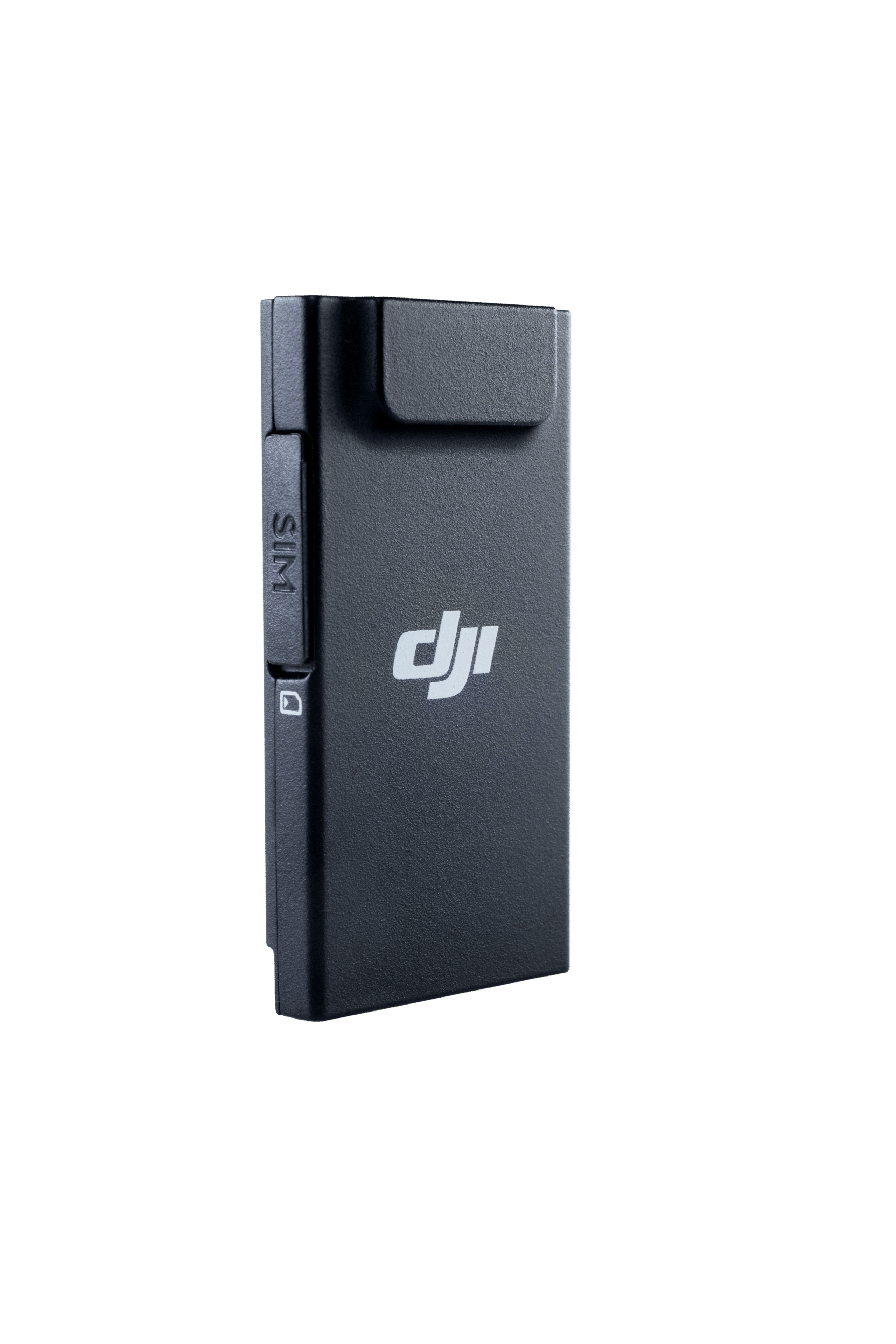
- 1x Zenmuse L3 Single gimbal connection
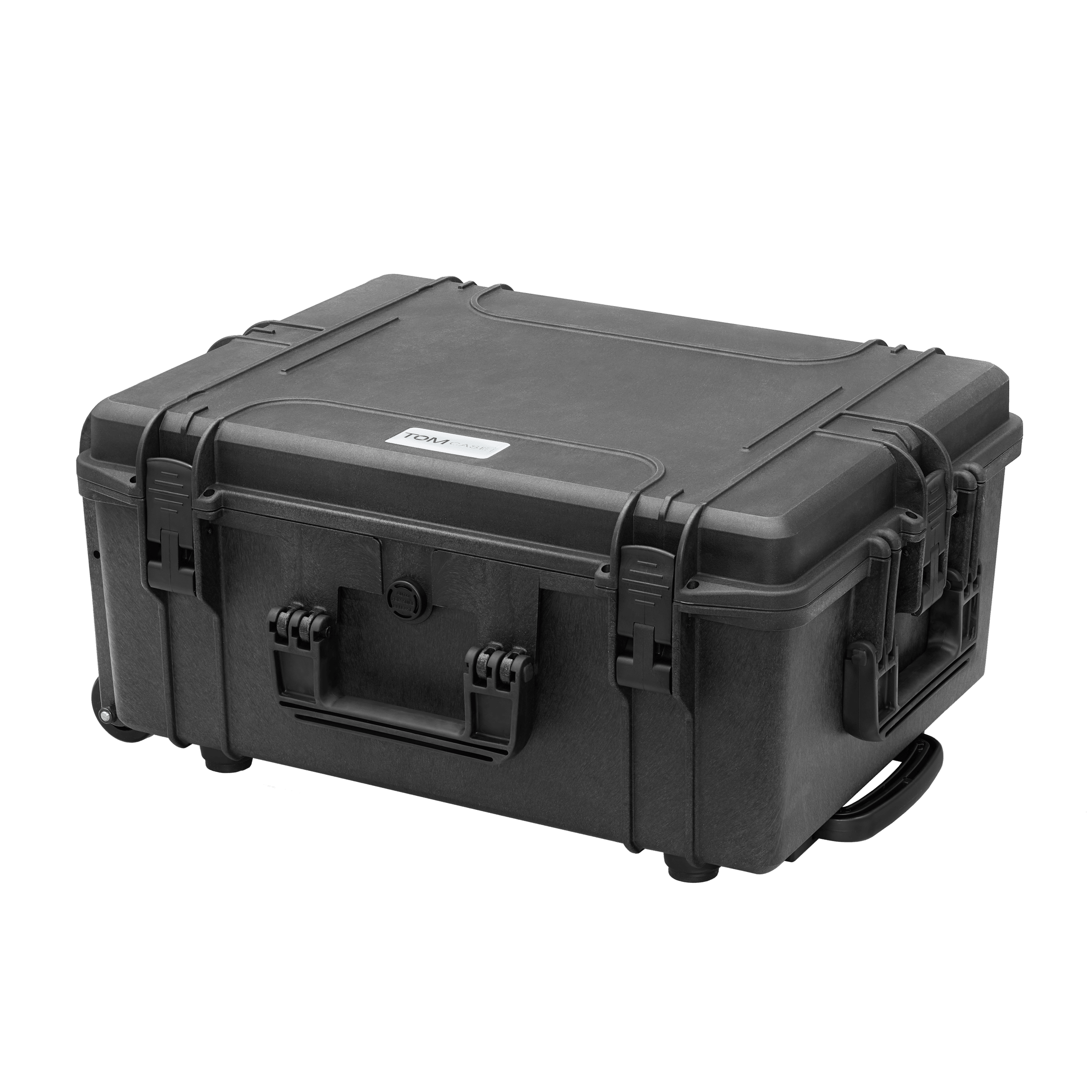
- 1x storage case
- 4x gimbal dampers
- 2x CFexpress type B memory card
- 1x CFexpress type B card reader
- 1x DJI Matrice 400 case insert (Zenmuse L3)
- 1x lens cleaning cloth
- Screws and tools
- incl. 12 months DJI Care Enterprise Plus
Technical data
| System specification | DJI Zenmuse L3 |
|---|---|
| System accuracy of the point cloud | At an altitude of 120 m: Vertical accuracy: 3 cm (RMSE) Horizontal accuracy: 4 cm (RMSE) At an altitude of 300 m: Vertical accuracy: 5 cm (RMSE) Horizontal accuracy: 7.5 cm (RMSE) Measured under the following conditions in a DJI lab environment: 1. the field contained objects with clearly recognizable edges or prominent angles. The DJI Matrice 400 was connected to a position-calibrated D-RTK 3 multifunction station. The flight route was created using the area route function of DJI Pilot 2 (with IMU calibration enabled) and linear scan mode. The airspeed was set to 15 m/s, the gimbal tilt was set to -90° and each straight segment of the flight route was shorter than 3300 m. 2. exposed, solid ground surfaces were used as checkpoints, which corresponded to the diffuse reflection model. 3) DJI Terra was used for post-processing with the "Optimize point cloud accuracy" function activated. |
| Point cloud thickness | 1.2 cm at 1σ (120 m flight altitude) 2 cm at 1σ (300 m flight altitude) Measured in linear scan mode, using checkpoints on objects with 80 % reflectivity, without point cloud optimization or downsampling activated in DJI Terra. For a deviation of 6σ multiply the specified thickness by 6. |
| Combined horizontal field of view (two RGB mapping cameras) | 107° Created by merging images from two cameras whose optical axes form an angle of 45° to each other. |
| RGB ground resolution (GSD) | Average: 3 cm (300 m flight altitude) Detailed calculation methods can be found in the user manual in the download section of the official DJI Zenmuse L3 website. |
| Weight | 1.60 kg (without single gimbal mount) The Zenmuse L3 single gimbal mount weighs 145 g. |
| 1.60 kg (without single gimbal mount) The Zenmuse L3 single gimbal mount weighs 145 g. | 192 × 162 × 202 mm (L × W × H) Measured in the standard stabilized state after power-on, with a non-orthogonal gimbal design. |
| 192 × 162 × 202 mm (L × W × H) Measured in the standard stabilized state after power-on, with a non-orthogonal gimbal design. | 64 W (typical value) 100 W (max) |
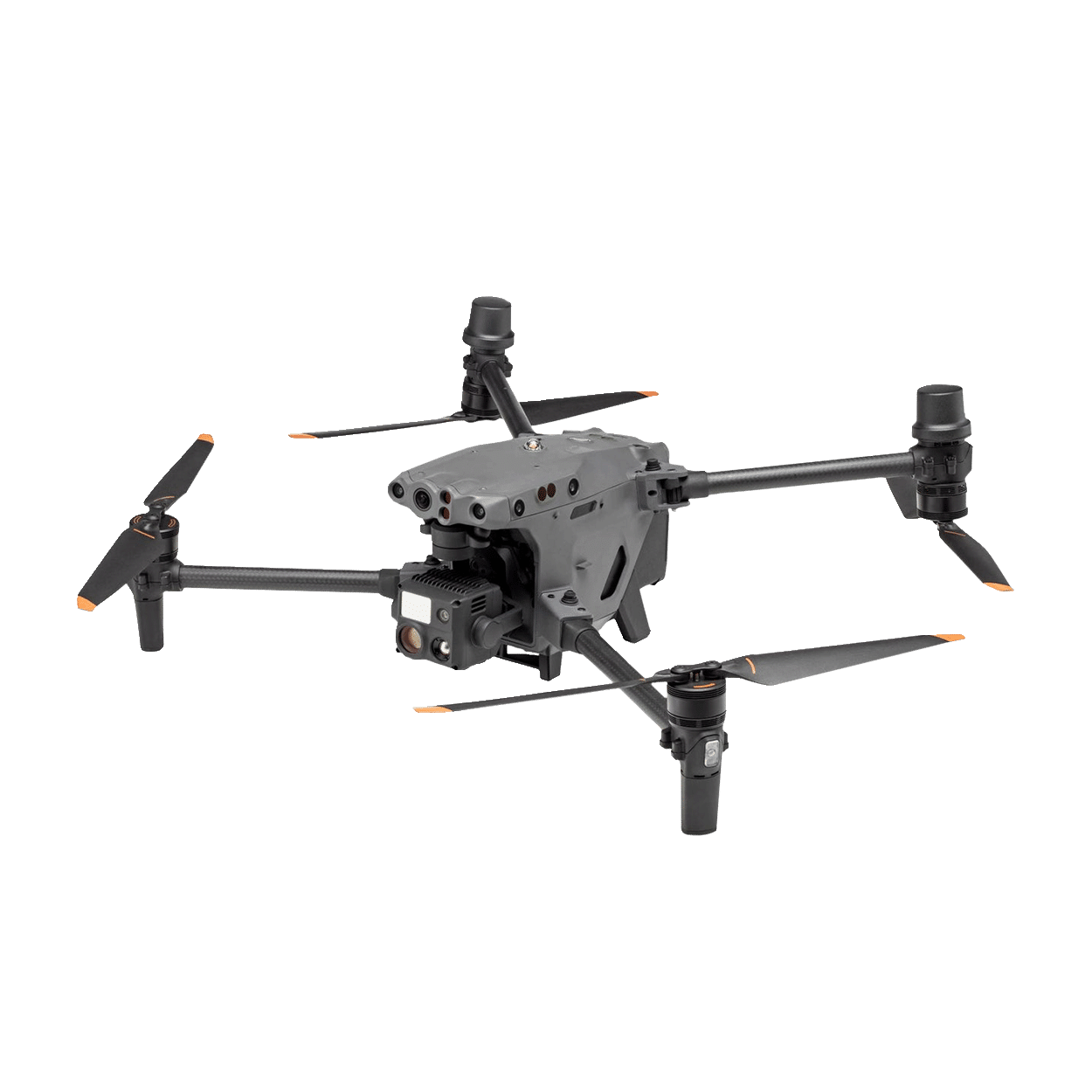
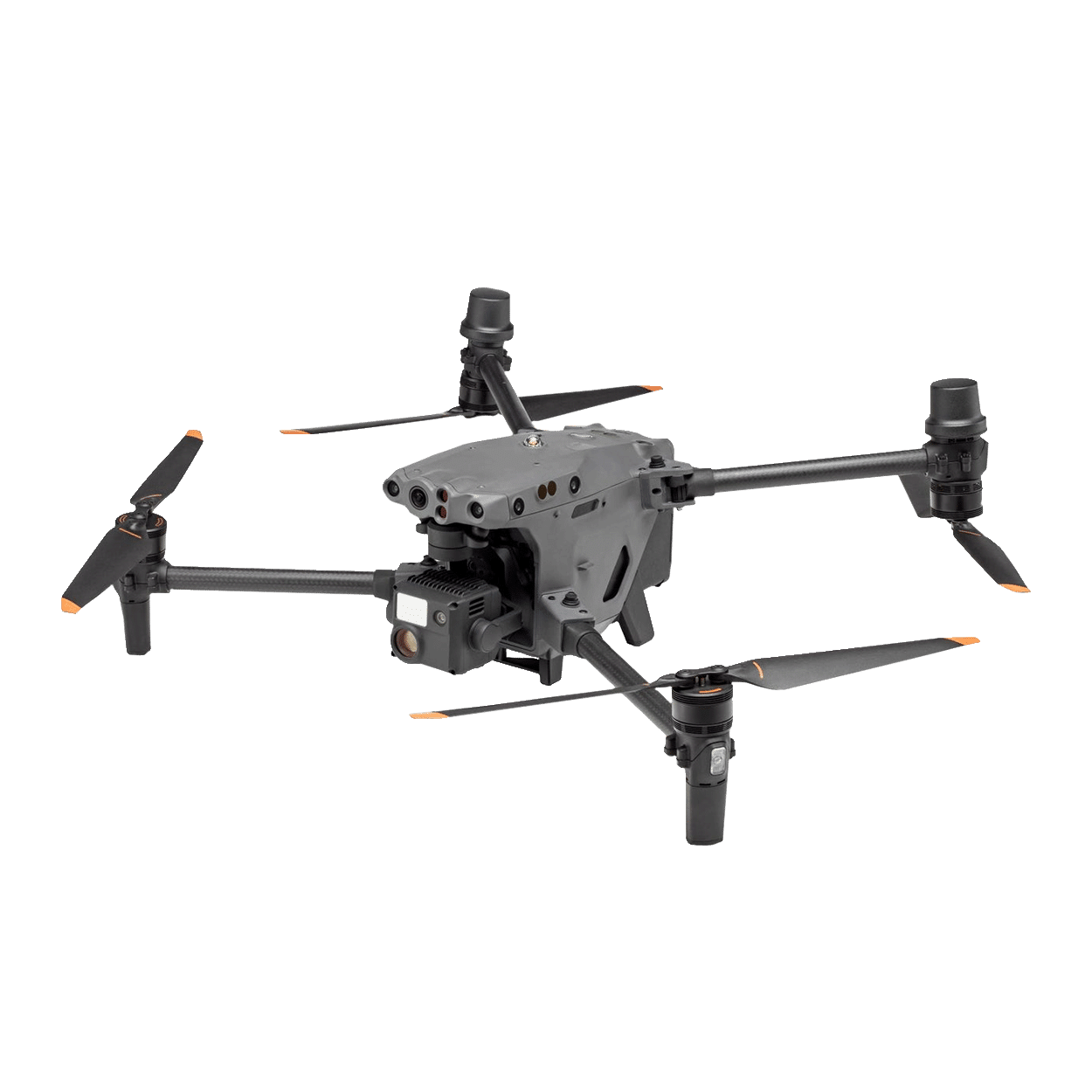
| Compatible aircraft | DJI Matrice 400 (requires the Zenmuse L3 single gimbal connection) |
| Protection class | IP54 |
| Operating temperature | -20 °C to 50 °C |
| Storage temperature | Storage temperature |
| LiDAR | DJI Zenmuse L3 |
|---|---|
| Laser wavelength | 1535 nm |
| Laser beam divergence | 0.25 mrad (1/e²) |
| Size of the laser dot | Φ 41 mm at 120 m (1/e²) Φ 86 mm at 300 m (1/e²) |
| Detection range | 700 m at 10 % reflectivity, 350 kHz 950 m at 10 % reflectivity, 100 kHz 2000 m at 80 % reflectivity, 100 kHz 1. definition of range: The distance at which 50 % of the emitted laser pulses are detected. If a laser beam hits several objects, the total power of the laser transmitter is divided, which reduces the achievable range. 2. test conditions: 100 klx ambient brightness, in the central area of the field of view, with a flat object larger than the diameter of the laser beam, at a vertical angle of incidence and an atmospheric visibility range of 23 km. 3. the maximum detection range is 900 m as standard. For a longer range, please contact DJI Support or an authorized dealer. |
| Detection range for cables | 21.6 mm aluminum steel core stranded wire: 300 m at 100 klx, 350 kHz 18.4 mm black PVC insulated wire: 100 m at 100 klx, 350 kHz 1. definition of range: The distance at which a fully scanned section of wire reaches a point density of 4 points per meter. 2. test conditions: 100 klx ambient brightness, 23 km atmospheric visibility, LiDAR center looking perpendicular to the wire, non-repetitive scan mode, drone flying at 15 m/s along the wire, and the wire is clean and undamaged. |
| Distance accuracy | Absolute accuracy: ±10 mm Repeatability: < 5 mm (1σ) The above specifications can be achieved under the test conditions of 25 °C ambient temperature, 350 kHz pulse frequency, 80 % object reflectivity and at distances of 120 m and 300 m. The actual conditions may differ from those of the test environment. The results given are for reference only. |
| Minimum effective detection distance | 10 m |
| Frequency of the laser pulses | 100 kHz, recommended flight altitude < 500 m 350 kHz, recommended flight altitude < 300 m 1000 kHz, recommended flight altitude < 100 m 2000 kHz, recommended flight altitude < 50 m |
| Number of reflections | 4, 8, 16 reflections (100 kHz, 350 kHz) 4, 8 reflections (1000 kHz) 4 reflections (2000 kHz) |
| Cross-cycle calculation | 7 times |
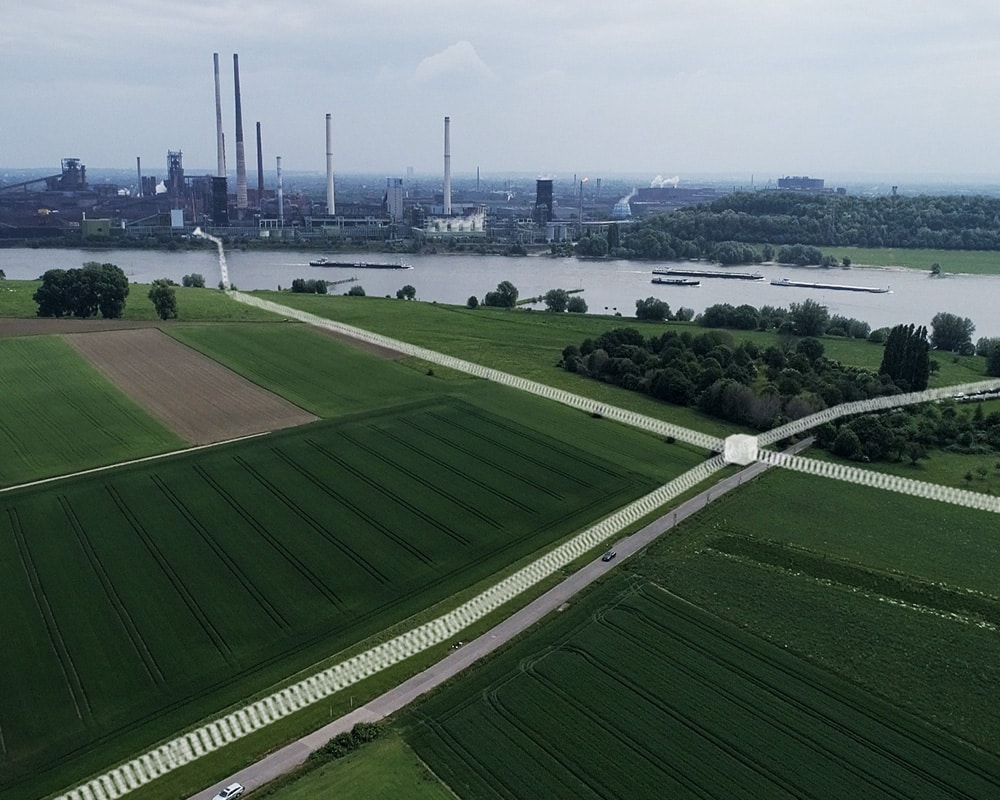
| Scan mode and field of view | Linear scan mode: Horizontal 80°, vertical 3° Star-shaped scan mode: Horizontal 80°, vertical 80° Non-repetitive scan mode: Horizontal 80°, vertical 80° |
| Laser safety class | Class 1 (according to IEC/EN 60825-1:2014) |
| RGB mapping camera | DJI Zenmuse L3 |
|---|---|
| Sensor | 4/3 CMOS |
| Lens | Equivalent focal length: 28 mm Field of view: 73.3° (diagonal), 62° (horizontal), 41.2° (vertical) Aperture: f/2.0 to f/11 |
| Closure | Mechanical shutter: 2-1/1500 s (f/2.0), 2-1/2000 s (f/2.8-f/11) Number of releases: 500,000 Electronic shutter: 2-1/16000 s |
| Image size | 100 MP: 12288×8192 25 MP: 6144×4096 |
| Shortest recording interval | JPEG: 25 MP: 0.5 s 100 MP: 1 s RAW or JPEG + RAW: 1,2 s |
| Video specification | Video format: MP4 (MPEG-4 HEVC/H.265) Resolution: 4K: 3840×2160 at 30 fps FHD: 1920×1080 at 30 fps |
| Positioning and orientation system (POS) | DJI Zenmuse L3 |
|---|---|
| GNSS update rate | 5 Hz |
| POS refresh rate | 200 Hz |
| Errors in layer determination | Yaw angle: 0.02° (post-processed, 1σ) Pitch/roll angle: 0.01° (recalculated, 1σ) |
| Position accuracy | Horizontal accuracy: 1.0 cm + 1 ppm (RTK-Fix) Vertical accuracy: 1.5 cm + 1 ppm (RTK-Fix) |
| Supported PPK differential data formats | DAT: Generated in base station mode with the D-RTK 3 multifunction station and the D-RTK 2 RINEX: v2.1x, v3.0x RTCM: v3.0, v3.1, v3.2, v3.3 (protocols: MSM3, MSM4, MSM5, MSM6, MSM7) OEM: OEM4, OEM6 When using, ensure that the distance between the multifunction station and the aircraft does not exceed 15 km and that the multifunction station supports satellite observation with more than two GNSS constellations. |
| Gimbal | DJI Zenmuse L3 |
|---|---|
| Degrees of freedom | 3 axles (pitch, roll, yaw) |
| Angular accuracy | ± 0,01° |
| Mechanical end point range | Pitch: -135° to +73° Roll: -90° to +60 Yaw: -105° to +105° Structural limit, not the controllable turning range. |
| Controllable rotation range | Pitch: -120° to +60° Yaw: -80° to +80° The roll angle is not controllable, but is only used for stabilization. |
| Self-testing method | Roll axle: Self-test not required Yaw axis: Check using end stop Pitch axis: Self-test not required |
| Mounting method | Detachable DJI SKYPORT (Zenmuse L3 single gimbal connection) |
| Data storage | DJI Zenmuse L3 |
|---|---|
| Storage of raw data | Photo/IMU/Point cloud/GNSS/Calibration files |
| Standard memory card | CFexpress™ Type B memory card, sequential write speed 1500 MB/s |
| Standard card reader | Read/write speed > 900 MB/s |
| Software ecosystem | DJI Zenmuse L3 |
|---|---|
| Data acquisition | DJI Pilot 2 |
| Data processing | DJI Terra |
| Data application | DJI Modify |
| Cloud application | DJI FlightHub 2 |
| Data format | DJI Terra supports the export of point cloud models in the following formats: Standard point cloud format: PNTS/LAS/LAZ/PLY/PCD/S3MB DJI Modify supports the import of point cloud models in the following formats: Standard point cloud format: LAS |
Information on product safety
Manufacturer:
DJI GmbH
Industriestrasse 12
97618 Niederlauer
Niederlauer, Germany
support.eu@dji.com
SZ DJI Technology Co.,Ltd
Lobby of T2, DJI Sky City, No. 53 Xianyuan Road, Xili Community, Xili Street, Nanshan District
518057 Shenzhen
Shenzhen, China
support@dji.com
Intermediaries:
Globe Flight GmbH
Borsigstrasse 7
93092 Barbing
Germany
info@globe-flight.de
Product Features
-
Performance without compromise
An integrated 1535 nm long-range LiDAR detects objects with only 10% reflectivity from up to 950 m away. This means that the L3 delivers reliable results even under difficult conditions - with unprecedented range and precision.
-
Maximum sharpness of detail
Two 100-megapixel RGB mapping cameras with a large field of view (107°) and mechanical shutter produce high-resolution, true-color images - perfect for precise orthophotos, DEMs and 3D models.
-
High accuracy and penetration
A precise POS system with a heading accuracy of 0.02° and a range repeatability of 5 mm ensures results accurate to the millimeter. Thanks to the low laser beam divergence, even fine structures such as power lines or vegetation are reliably detected.
-
Efficiency in a new dimension
In combination with the DJI Matrice 400, the Zenmuse L3 covers up to 10 km² per flight. This allows large-scale projects to be realized in record time - from planning to recording and evaluation.
-
Seamless workflow - from recording to the result
As part of the DJI ecosystem, the Zenmuse L3 fits perfectly into the end-to-end solution consisting of DJI Pilot 2, DJI Terra and DJI Modify. Point clouds, maps and 3D models can be captured, analyzed and shared directly in the cloud - securely, quickly and efficiently.
Our competences
Full Service
Solutions
Droniq supports BOS & industry in all phases of drone operations.
Real
Experts
More than 100 years of know-how in aviation & telecommunications.
Experienced
industry professionals
Specialized in BOS and industrial drones.
Quality
seal
Droniq is a certified drone dealer.